
A user interview is one of the most reliable methods for understanding real needs, real behavior, and real decision-making. Unlike analytics or surveys, a user interview provides direct context behind why users act the way they do.
This guide explains how to plan, conduct, and analyze a user interview in a structured, unbiased way. The goal is not validation or persuasion, but extracting insights that can inform better product, design, or business decisions.
What Is a User Interview?
A user interview is a structured conversation designed to understand user behavior, motivations, workflows, and pain points. It focuses on past experiences rather than opinions about hypothetical solutions.
A well-run user interview captures context that quantitative data cannot reveal.
Why User Interviews Are Important
User interviews reduce assumption-driven decisions. They help teams identify gaps between intended design and real-world usage. When insights come directly from users, decisions become more defensible.
A consistent user interview practice improves prioritization, usability, and long-term product direction.
When to Conduct a User Interview
User interviews can be useful at different stages of a product or service lifecycle. They are especially valuable before committing to major design or feature decisions.
- Before building a new feature
- After identifying usability issues
- During early product discovery
- When evaluating user retention problems
- Before redesigning workflows
Preparing for a User Interview
Preparation determines the success of a user interview. Start by defining clear learning objectives. Avoid vague goals and focus on specific behaviors, decisions, or challenges you want to explore.
Draft open-ended questions. Avoid leading language and avoid asking users to design solutions during the interview.
Recruiting Interview Participants
Participant selection directly affects insight quality. A user interview should involve people who represent actual or target users, not internal stakeholders.
Define criteria such as experience level, usage frequency, and relevant context before recruitment begins.
Structuring the Interview Session
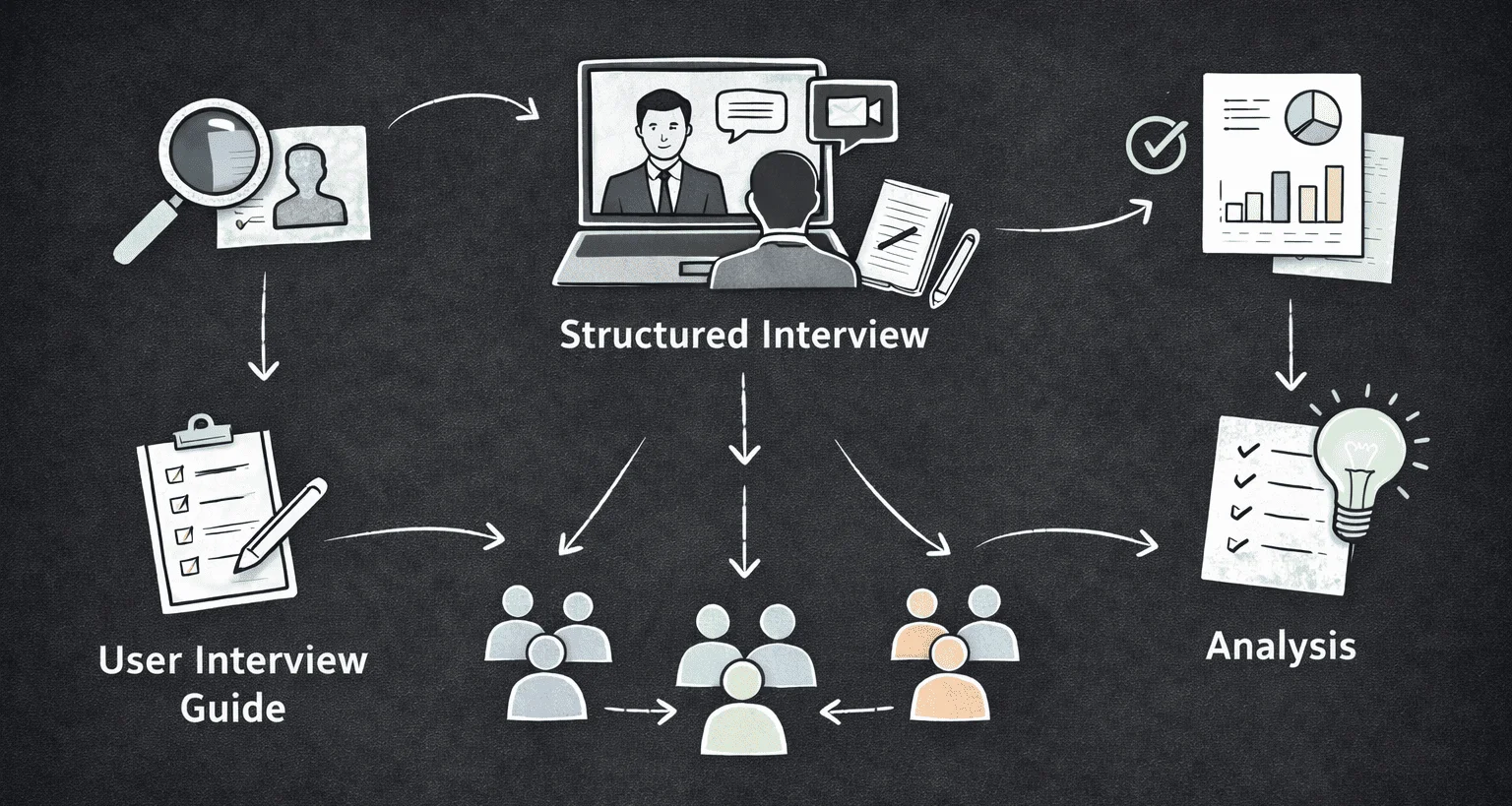
Most user interviews follow a simple structure: introduction, core questions, and closing. This keeps the conversation focused while allowing natural discussion.
Start with background questions, then move into detailed experiences, and finish with reflective prompts.
Effective User Interview Questions
Strong user interview questions encourage storytelling and recall. Focus on what users did, not what they think they would do.
- “Tell me about the last time you…”
- “What happened just before that?”
- “What made that step difficult?”
- “How did you decide what to do next?”
- “What alternatives did you consider?”
Listening Without Bias
Neutral listening is essential. Avoid correcting users or explaining features. Silence can encourage deeper reflection.
A successful user interview prioritizes curiosity over confirmation.
Recording and Note-Taking
Always request consent before recording. Recordings allow better focus during the session. Notes should capture emotions, hesitations, and emphasis rather than full transcripts.
Summarize insights immediately after each interview while details remain fresh.
Analyzing User Interview Data
Analysis turns interviews into actionable insights. Look for repeated patterns across sessions. Group similar pain points and workflows.
Avoid over-weighting single opinions. A user interview gains value through comparison and synthesis.
Common User Interview Mistakes
Many teams undermine interviews unintentionally. Awareness helps prevent unreliable conclusions.
- Asking leading questions
- Talking more than listening
- Defending existing solutions
- Ignoring contradictory feedback
- Stopping after one interview
How Many User Interviews Are Needed?
Patterns often emerge after five to eight interviews. Continue until additional interviews stop producing new insights.
Insight saturation matters more than volume in a user interview process.
Turning Insights Into Decisions
Insights should inform action. Share findings with clear summaries, supporting quotes, and recommended next steps.
When linked to decisions, user interviews become a strategic asset.
Final Thoughts
A user interview is not about validating ideas. It is about understanding reality. When conducted thoughtfully, interviews reveal insights that shape better outcomes.
Ask precise questions. Listen carefully. Let evidence guide decisions.