
Interview notes are written records captured during or immediately after an interview to document key points, observations, and decisions. When used well, interview notes improve clarity, reduce bias, and support better hiring outcomes.
This guide explains what effective interview notes look like, how to take them without disrupting conversation, and how they should be reviewed after the interview ends.
What Are Interview Notes?
Interview notes are structured or semi-structured observations recorded by interviewers during the hiring process. They typically capture candidate responses, examples shared, and evaluation signals.
These notes become reference points during feedback sessions and hiring decisions.
Why Interview Notes Matter
Memory fades quickly after interviews. Interview notes preserve accuracy and prevent decisions based on impressions alone.
Well-documented notes also support fairness by grounding evaluations in evidence.
Who Should Take Interview Notes
Anyone involved in evaluating candidates should take interview notes. This includes recruiters, hiring managers, technical interviewers, and panel members.
Shared responsibility improves perspective balance.
When to Take Interview Notes
Interview notes can be taken during the interview, immediately afterward, or both. Each approach has advantages.
Many interviewers jot keywords during the conversation and expand notes once the interview concludes.
What to Include in Interview Notes
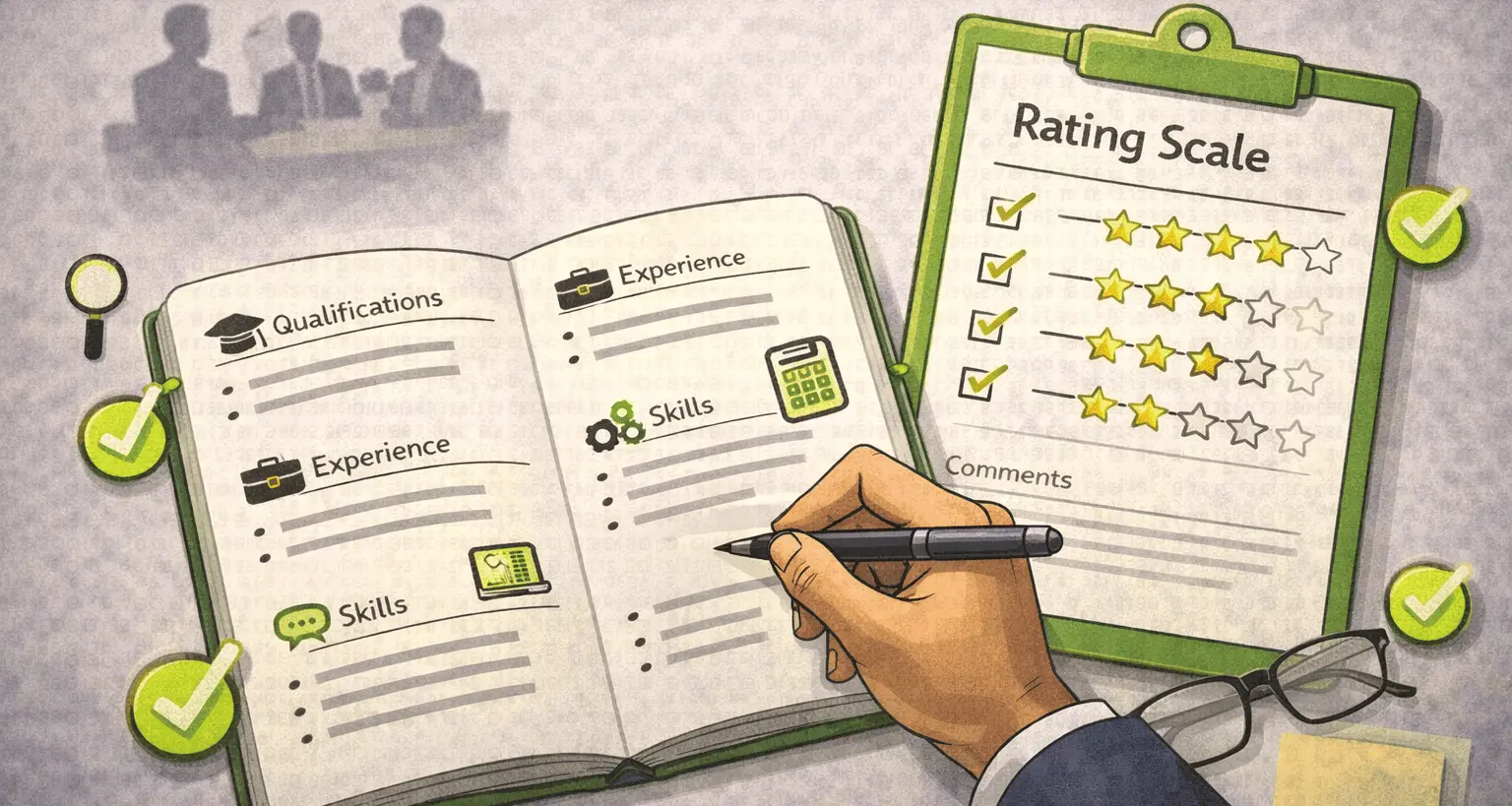
Effective interview notes focus on substance, not transcription. Capture signals that influence hiring decisions.
- Key examples shared by the candidate
- Skills demonstrated
- Decision-making approach
- Communication clarity
- Concerns or gaps
What to Avoid in Interview Notes
Interview notes should avoid subjective or irrelevant commentary. Personal impressions unrelated to job performance introduce bias and reduce usefulness.
Focus on observable behavior and concrete examples.
Interview Notes and Bias Awareness
Structured interview notes help mitigate bias by anchoring feedback to criteria. Free-form impressions often distort evaluation.
Consistency improves comparability across candidates.
Interview Notes in Panel Interviews
In panel interviews, interview notes become especially important. Multiple perspectives must be synthesized into a single hiring decision.
Panel members should document independently before discussing feedback.
Interview Notes and Interview Format
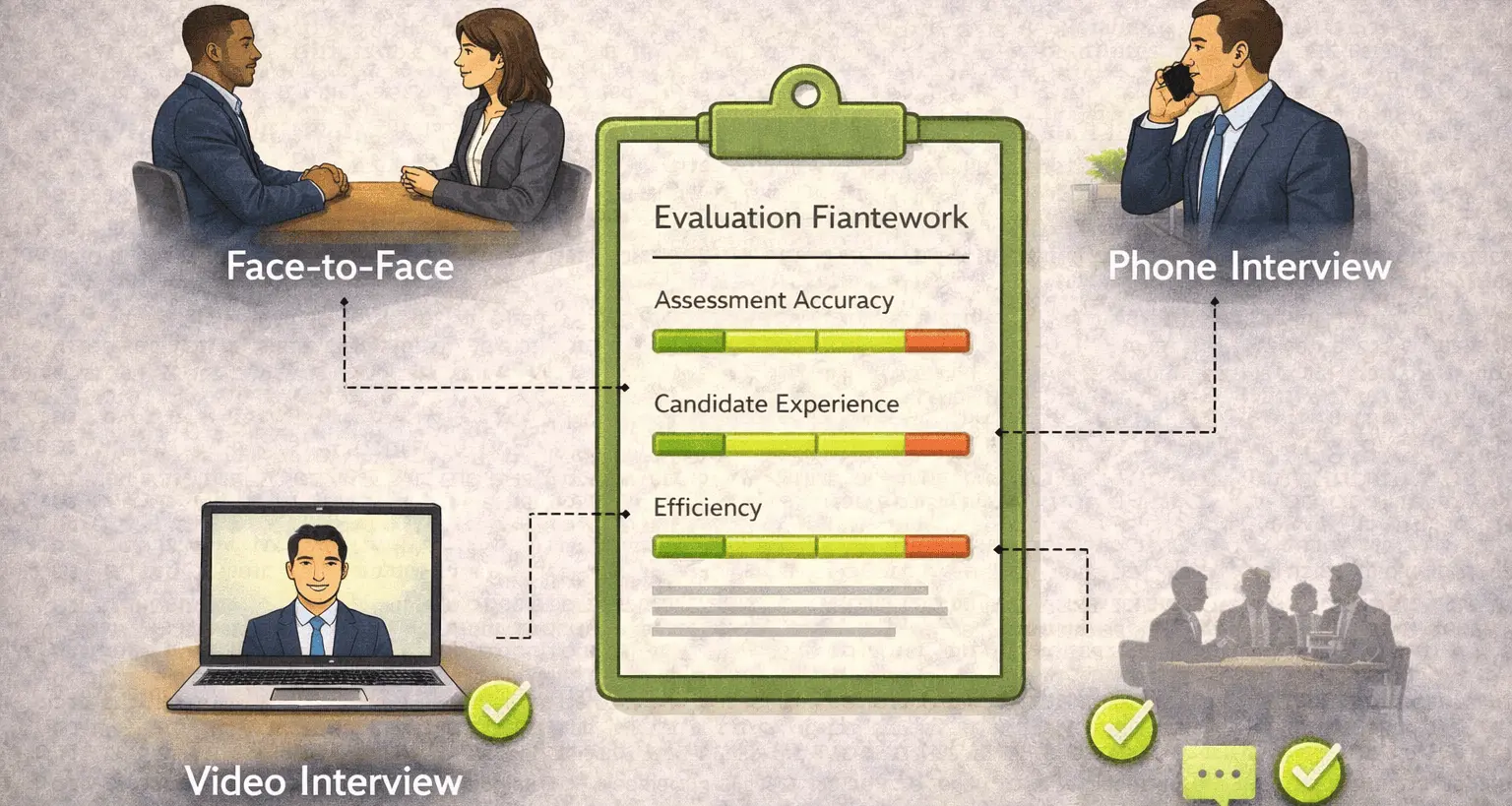
The interview format influences note-taking style. Phone interviews emphasize verbal clarity, while video and in-person formats include nonverbal cues.
Reviewing interview format expectations helps align notes with structure.
Using Interview Notes After the Interview
Interview notes should be reviewed soon after the interview. Delays reduce accuracy and confidence in recall.
Clear notes support structured debrief discussions.
Interview Notes in Hiring Decisions
Hiring decisions rely on collective input. Interview notes provide evidence to support recommendations.
Decisions grounded in notes are easier to justify and review.
Legal and Compliance Considerations
Interview notes may be subject to audit or review. Clear, job-related documentation protects organizations from risk.
Avoid recording sensitive personal information.
Digital vs Handwritten Interview Notes
Digital notes offer searchability and sharing, while handwritten notes may feel less intrusive. Both approaches can be effective.
Consistency matters more than medium.
Common Interview Notes Mistakes
Certain mistakes reduce the value of interview notes. Awareness helps maintain quality.
- Writing vague impressions
- Recording opinions without examples
- Delaying documentation
- Mixing evaluation with speculation
- Failing to align notes with criteria
Interview Notes for Candidates
Candidates can also take interview notes. Recording questions asked and topics discussed supports follow-up communication.
Notes help candidates prepare for subsequent interview stages.
Interview Notes and Follow-Up
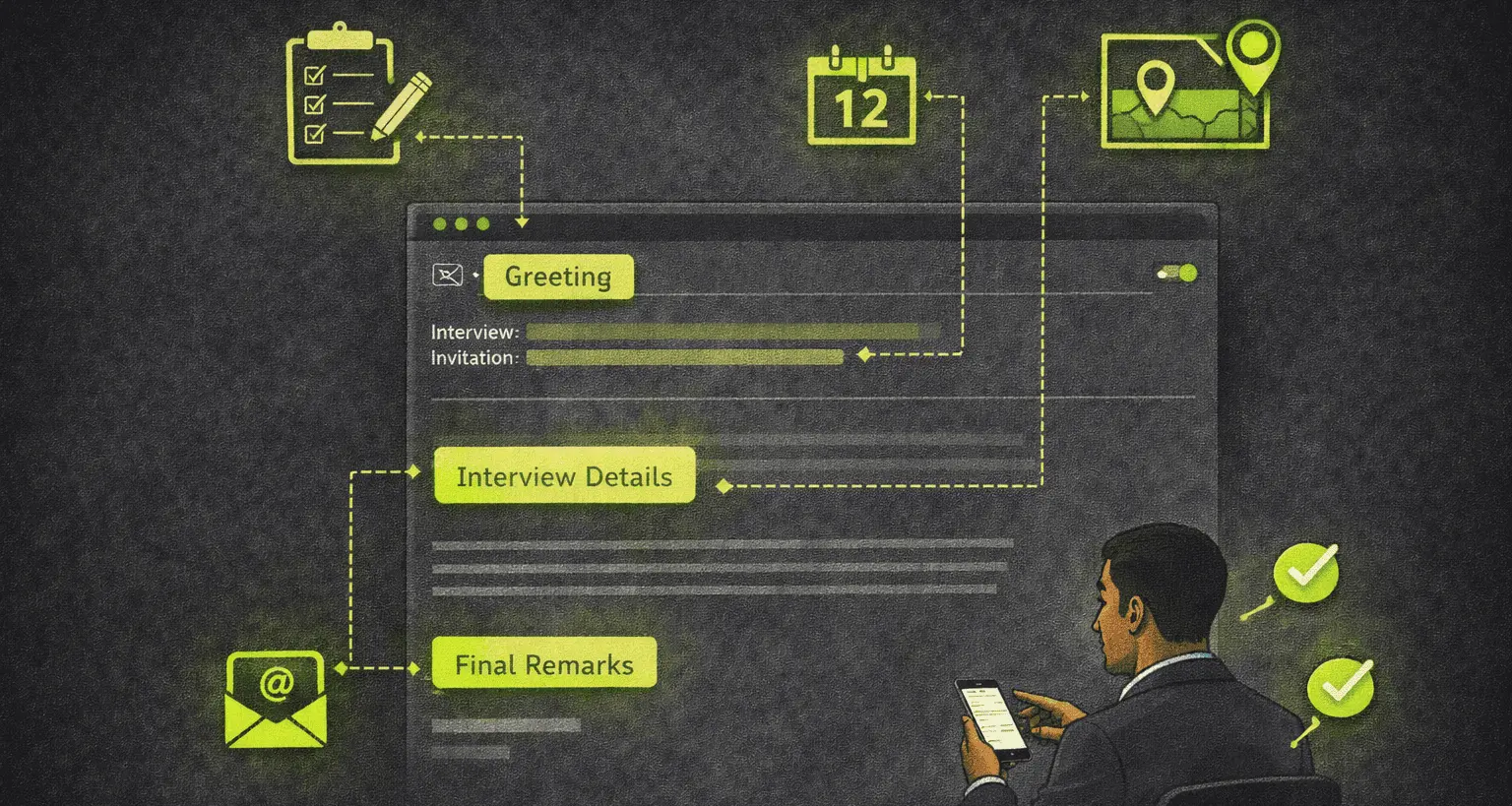
Interview notes inform follow-up emails, reflections, and next-round preparation. Accurate recall strengthens professionalism.
This aligns with effective interview communication practices across stages.
Final Thoughts
Interview notes transform interviews from memory-based impressions into evidence-based decisions. When captured thoughtfully, they improve fairness, clarity, and confidence.
Write with intent. Review with discipline. Let notes guide better outcomes.