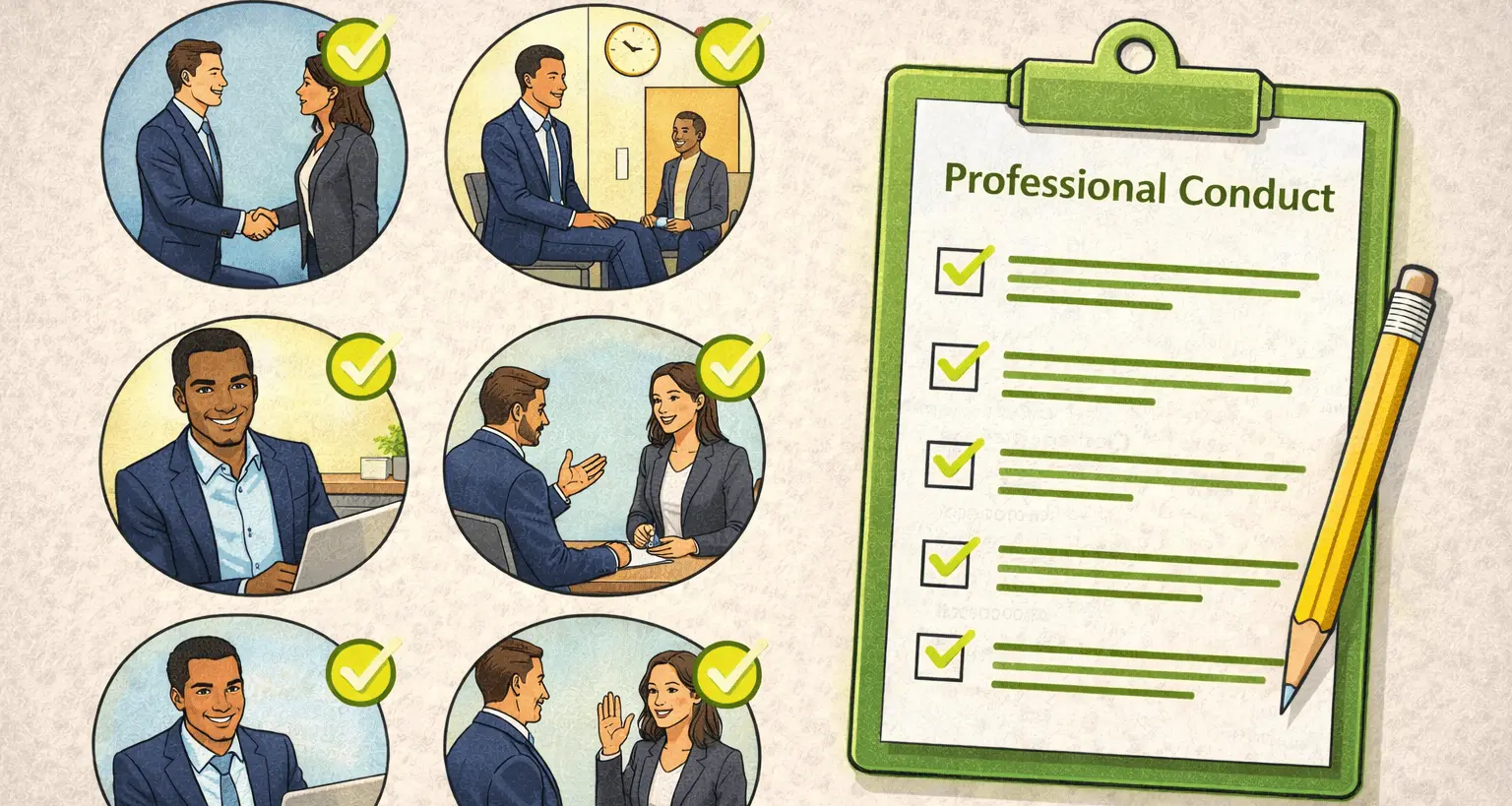

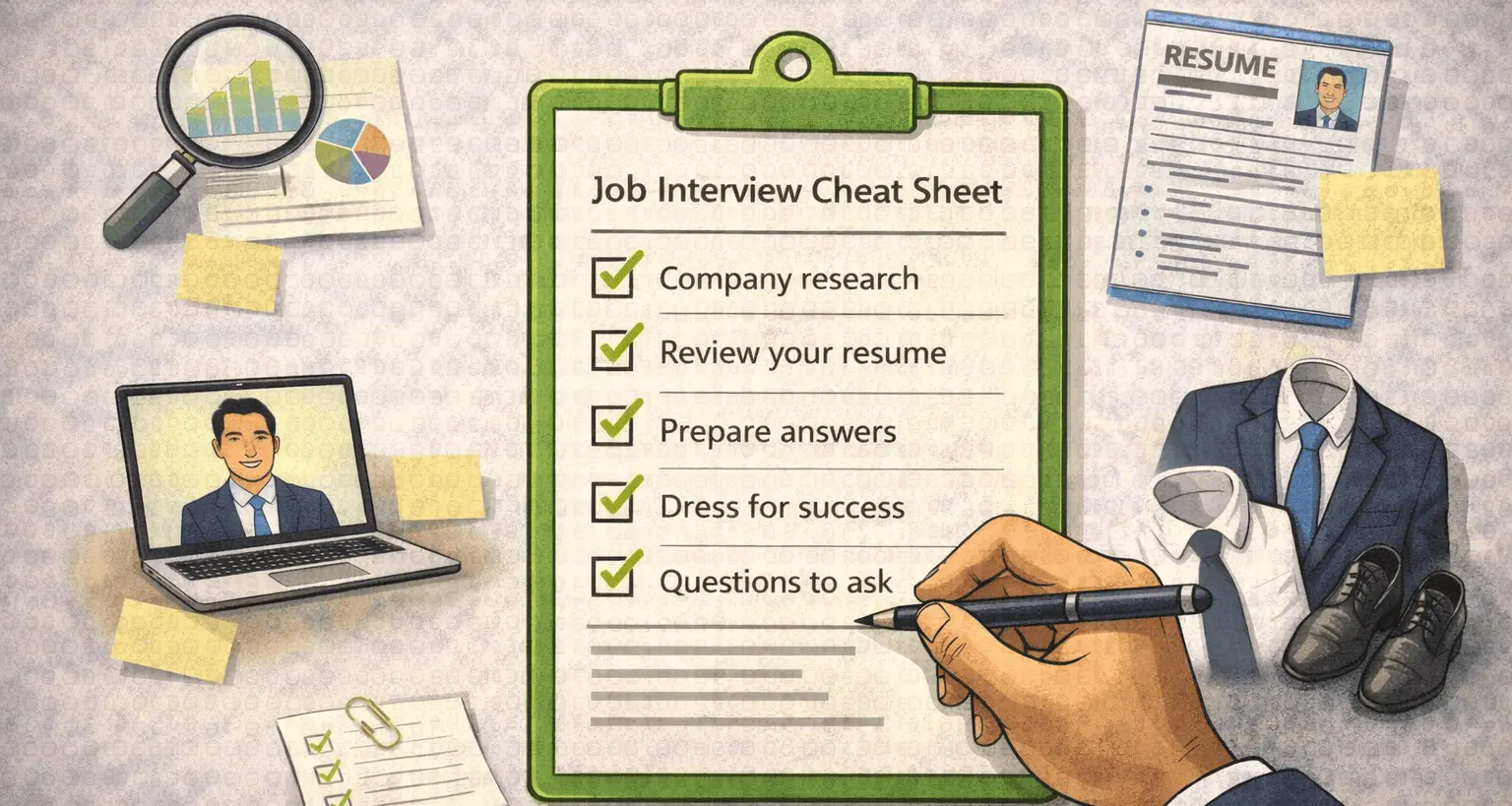
A job interview cheat sheet is a concise reference that helps candidates recall key points before and during an interview. It is not a script or memorized answer set, but a mental framework for clarity and confidence.
This job interview cheat sheet covers preparation essentials, common question strategies, behavioral reminders, and last-minute checks that consistently influence interview outcomes.
What Is a Job Interview Cheat Sheet?
A job interview cheat sheet is a structured summary of what candidates should remember under pressure. It focuses on priorities rather than details, helping candidates stay composed and responsive.
The best cheat sheets reduce cognitive overload instead of adding more information.
Why a Job Interview Cheat Sheet Works
Interviews trigger stress and time pressure. A cheat sheet anchors attention to what matters most, preventing rambling or reactive answers.
Candidates who prepare a cheat sheet tend to communicate with more structure and intent.
Core Preparation Checklist
Every job interview cheat sheet should start with preparation basics. These elements apply across roles and industries.
- Role requirements and responsibilities
- Company mission and recent activity
- Your top three strengths for the role
- One clear reason you want the job
- Two relevant success stories
Key Self-Introduction Reminder
Most interviews begin with an introduction prompt. Your cheat sheet should remind you to keep this response concise and forward-looking.
Focus on role relevance, not a full career timeline.
Behavioral Answer Framework
Behavioral questions appear in nearly every interview. A job interview cheat sheet should reinforce structured storytelling.
Remember the flow: situation, action, outcome, and reflection.
Technical and Role-Specific Prompts
For technical or specialized roles, cheat sheets should highlight core concepts and problem-solving steps, not raw definitions.
This aligns with preparation strategies in interview methods.
Questions You Should Ask
A strong job interview cheat sheet always includes questions for the interviewer. These demonstrate curiosity and intent.
- What does success look like in this role?
- How does the team measure performance?
- What challenges does the role face?
Communication Reminders
Interviews reward clarity over speed. Your cheat sheet should remind you to pause, listen fully, and answer directly.
This supports professional interview etiquette across formats.
Body Language and Presence
Nonverbal cues influence perception. A cheat sheet reminder helps candidates stay grounded under pressure.
Sit upright, maintain eye contact, and avoid defensive gestures.
Time Management During Answers
Overlong answers dilute impact. A job interview cheat sheet should remind candidates to stay within one to two minutes per response.
Concise answers invite better follow-up questions.
Virtual Interview Reminders
For online interviews, cheat sheets should include technical checks, camera framing, and environment awareness.
Review online interview tips if the format is remote.
Common Mistakes to Avoid
A job interview cheat sheet is also a reminder of what not to do. These mistakes appear across experience levels.
- Speaking without structure
- Criticizing previous employers
- Overusing filler words
- Ignoring the interviewer’s cues
- Failing to ask questions
Last Five Minutes Before the Interview
The final moments before an interview are when cheat sheets matter most. Review priorities, not details.
Breathe, focus, and enter with intention.
Using a Job Interview Cheat Sheet Ethically
A cheat sheet is a preparation tool, not a script to read during the interview. Use it to guide thinking, not replace authentic conversation.
Authenticity paired with structure produces the strongest results.
Final Thoughts
A job interview cheat sheet sharpens focus when pressure rises. It reminds candidates of what matters, how to respond, and when to pause.
Prepare deliberately. Communicate clearly. Let structure support confidence.