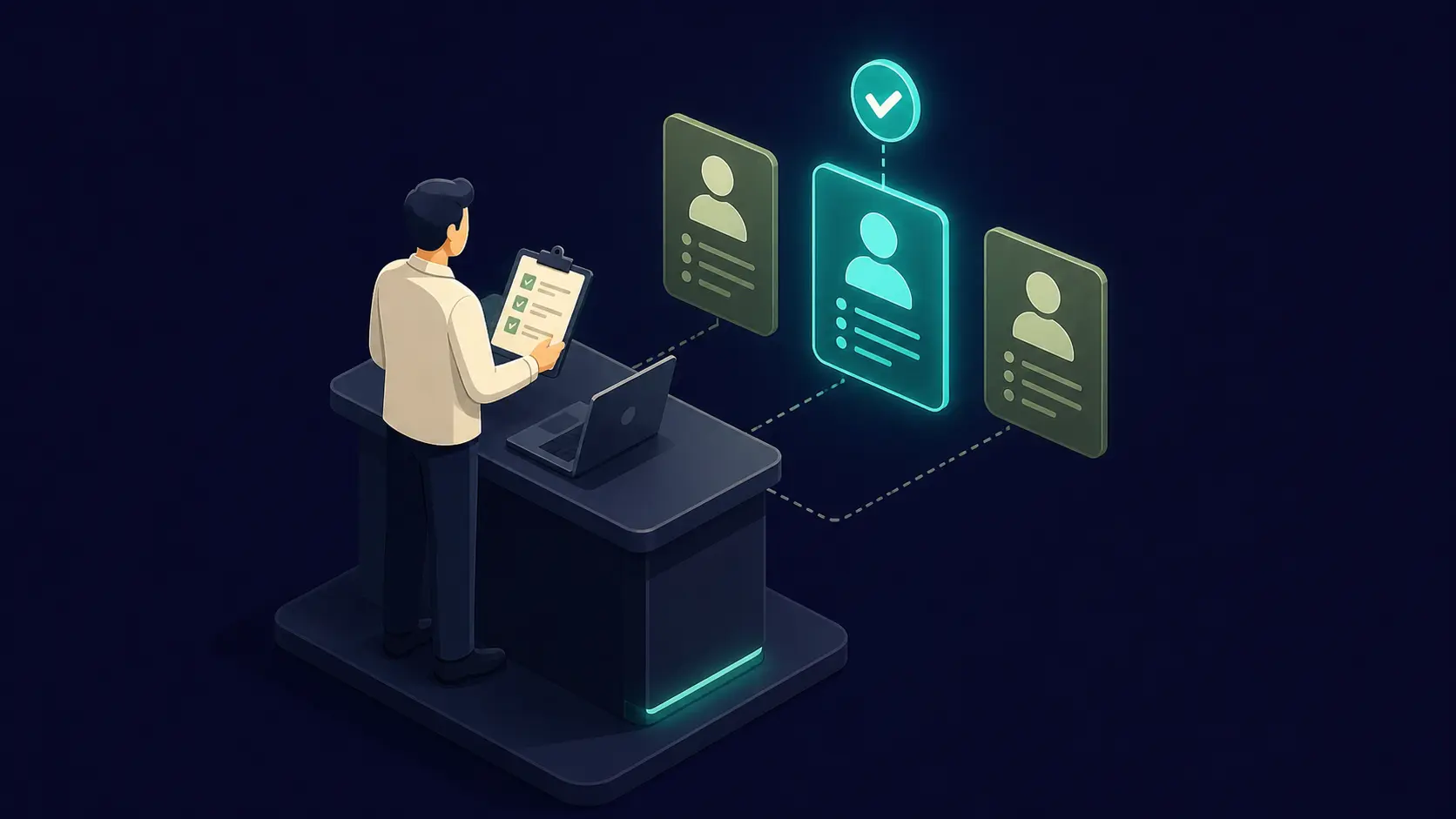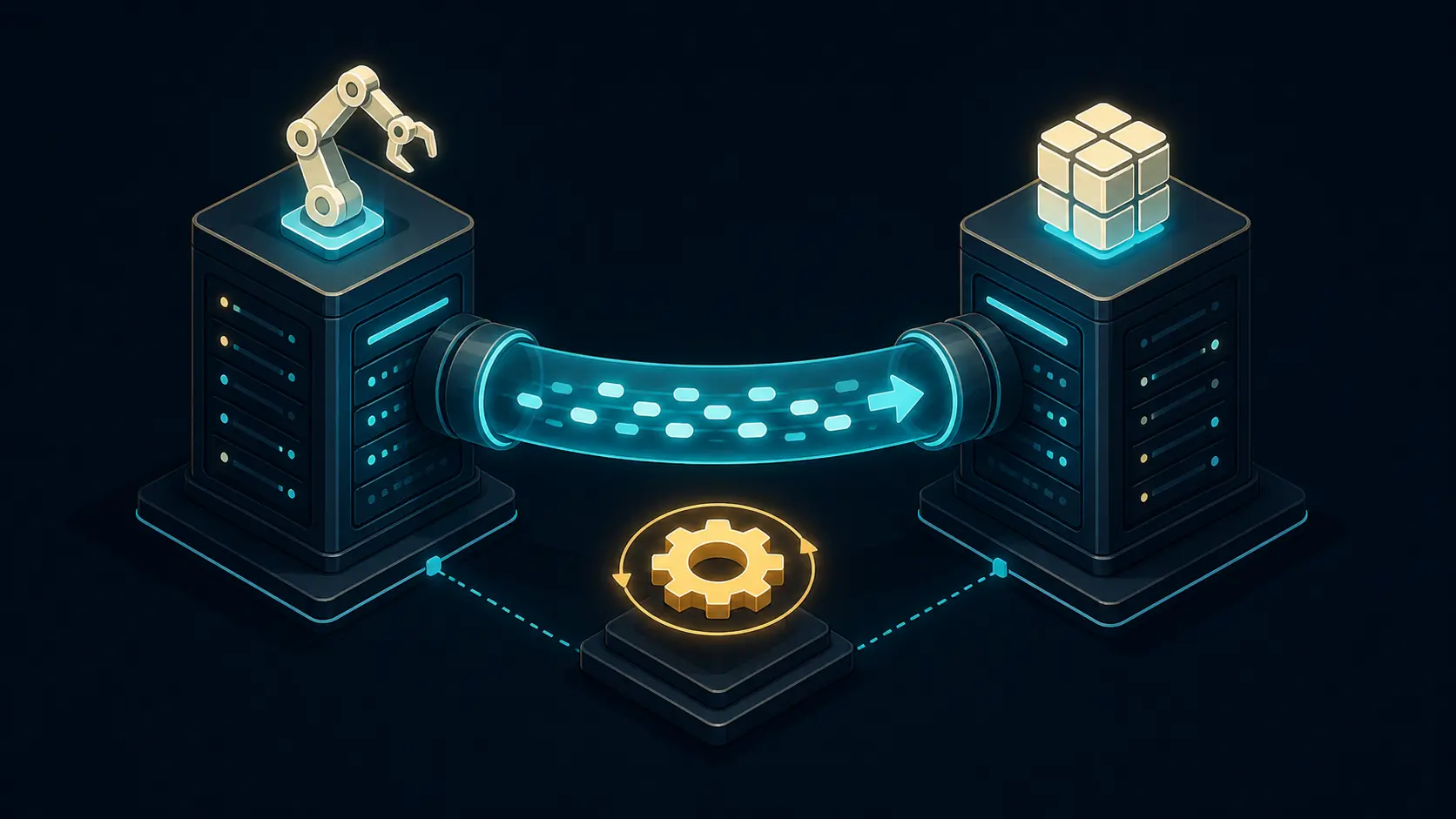


User research interviews generate unprecedented volumes of qualitative data—often hundreds of hours of recordings, transcripts, and notes annually. Yet most teams still manually code, tag, and analyze interviews the old way: one researcher per interview, spreadsheets, endless back-and-forth synthesis. This approach breaks at scale. If you're conducting 200+ user interviews yearly for product research, customer research, or user experience studies, AI-powered moderation platforms become essential infrastructure. AI-powered moderation platforms transcribe interviews in real time, extract key themes automatically, flag sentiment shifts, and generate synthesis reports that would take weeks to produce manually. This guide compares platforms, implementation timelines, and best practices so you can evaluate recommended ai solutions for user interview moderation that fit your research workflow.
Why Manual Interview Moderation Doesn't Scale
User research teams have a data problem that looks like a tool problem. A typical research workflow: conduct 15 user interviews (10–15 hours total), schedule three researchers for a 4-hour synthesis session, manually identify themes, code responses, build affinity maps on a whiteboard, transcribe findings into slides. Time invested: 40–50 hours for one research round. Cost: $4,000–$5,000 in labor. If you run four research rounds annually (quarterly research cycles), that's 160–200 hours per year, or $16,000–$20,000 in pure synthesis labor.
Now add governance: multiple researchers interpret themes differently. One codes "frustration with onboarding" as "UX friction"; another codes it as "feature request." Consistency drops. Bias creeps in. Senior researcher's interpretation dominates synthesis, even if junior researcher spotted a better insight. Knowledge gets siloed: only the person who moderated the interview remembers the nuance behind a quote.
Recommended ai solutions for user interview moderation solve all of these. Transcription becomes automatic (AI transcribes audio in real time or post-hoc). Theme extraction becomes consistent (same algorithm applies to every interview). Sentiment and emotion tracking becomes quantifiable (AI flags frustration, confusion, delight with timestamps). Synthesis becomes a collaboration tool, not a siloed process. A researcher can now moderate 3–4 interviews per week instead of 1–2, with better documentation.
Define Your Research Interview Baseline
Before selecting recommended ai solutions for user interview moderation, document your current state:
- Annual interview volume: How many user interviews do you conduct? (Range: 20–500+)
- Interview duration: Typical length? (Range: 30 min to 2 hours)
- Synthesis time per interview: Hours spent analyzing one interview? (Typical: 3–5 hours)
- Research team size: How many researchers, moderators, and analysts?
- Interview formats: Phone calls, video calls, in-person, remote unmoderated?
- Output requirements: Do you need transcripts, theme summaries, affinity maps, or all three?
- Compliance needs: Do you need participant consent tracking, GDPR compliance, or data privacy certifications?
- Integration points: Does your research tool (UserTesting, Respondent, Qualtrics) need to connect to your moderation platform?
Example baseline: 100 interviews/year × 4 hours synthesis per interview = 400 hours annually. At $60/hour loaded cost (researcher salary + overhead) = $24,000/year in pure synthesis labor. If AI-powered moderation platforms reduce synthesis to 1 hour per interview (AI pre-synthesizes, researcher reviews/validates), total drops to $6,000/year. Payback for a $3,000/year platform: 6 months.
Core Capabilities: What to Compare
Recommended ai solutions for user interview moderation vary widely in feature set. Compare these:
Real-time transcription:
Does the platform transcribe live as the interview happens, or only after recording upload? Real-time transcription with live timestamps helps moderators adjust questions on the fly. Post-hoc transcription works for analysis-focused workflows.
Speaker identification:
Can the platform distinguish between moderator and participant? Can it track multiple participants (e.g., user + family member, multiple users in a group interview)?
Sentiment and emotion detection:
Does AI flag frustration, confusion, delight, skepticism with timestamps and confidence scores? This is critical for identifying moments that need deeper follow-up.
Theme and topic extraction:
Does the platform automatically extract recurring themes, pain points, feature requests, or vocabulary? Can you customize the taxonomy (e.g., "onboarding friction" as a custom tag)?
Quote extraction:
Does AI surface representative quotes for each theme? This saves 80% of manual quote-hunting time.
Affinity mapping:
Can the platform visualize themes across all interviews, cluster related insights, and show frequency of mentions? This accelerates synthesis.
Custom codebook support:
Can you import your own codebook (predefined themes, tags, variables) and have AI auto-code against it?
Integration with research tools:
Does it connect to UserTesting, Respondent, Qualtrics, or your data warehouse?
Export options:
Can you export in formats your team uses (Google Docs, Notion, Excel, Slack)?
Participant anonymization:
Can you strip identifiers automatically for compliance or research ethics?
Platform Comparison: Pricing and Trade-offs
Recommended ai solutions for user interview moderation fall into three categories:
Standalone AI transcription + analysis:
Platforms like Otter, Fathom, or Avoma focus on interview transcription with basic theme extraction. Cost: $10–$25/month per user. Best for: small teams, lightweight workflows. Limitation: minimal customization, limited integration.
Research-native platforms with AI features:
Tools like UserTesting, Respondent, and Dscout are adding AI moderation to their research tools. Cost: $500–$2,000/month for research panel access + moderation. Best for: integrated workflows where you conduct and analyze in one tool. Limitation: expensive if you only need moderation (you're paying for full research platform).
Enterprise qualitative analysis suites:
Platforms like NVivo, Atlas.ti, or Dedoose offer professional-grade coding and analysis with AI-assisted features. Cost: $100–$500/month or $1,000–$5,000 one-time licensing. Best for: academic research, large teams, complex codebooks. Limitation: steep learning curve, overkill for simple research workflows.
Custom solution using AI APIs:
Build on top of Anthropic, OpenAI, or Google Cloud APIs to create custom moderation. Cost: $0.02–$0.10 per transcribed minute. Best for: high-volume workflows, specific compliance requirements. Limitation: requires engineering resources. For most user research teams conducting 100–300 interviews annually, standalone AI transcription platforms ($200–$500/year) offer best ROI.
How Recommended AI Solutions for User Interview Moderation Works
AI-powered moderation follows an end-to-end workflow:
Step 1: Upload or Record.
Researcher uploads interview recording (or records live in the platform). Audio file queued for transcription.
Step 2: Transcription.
AI transcribes audio to text in 2–10 minutes (depending on platform and file size). Timestamps aligned with speaker turns.
Step 3: Theme Extraction.
AI analyzes transcript, extracts recurring phrases, identifies sentiment shifts, and suggests themes based on your codebook or learns unsupervised patterns.
Step 4: Researcher Review.
Researcher reviews AI-generated summary, adjusts tags, adds context notes, exports findings. Time to completion: 15–30 minutes per interview (vs. 3–5 hours manually).
Step 5: Cross-Interview Synthesis.
Platform aggregates themes across all interviews, shows frequency of mentions, and surfaces contrasting viewpoints. Researcher builds affinity map in minutes instead of hours.
Step 6: Export and Share.
Final analysis exported to slides, docs, or shared dashboard. Non-researchers (designers, product managers) can review directly. The entire cycle from interview to shareable insights: 1–2 days (vs. 1–2 weeks manual synthesis).
Implementation Timeline
Week 1: Platform selection, contract, and pilot setup. AI moderation vendors typically offer 2-week free trials. Upload 3–5 existing interviews, test transcription and theme extraction.
Week 2–3: Team training and workflow integration. Configure custom codebook (if needed), set up integrations with existing tools, and run one live interview as test.
Week 4: Full rollout to all research activities. All new interviews processed through platform. Retrospectively process backlog of unanalyzed interviews.
Week 5+: Continuous improvement. Monitor AI accuracy (transcription error rate, theme relevance). Adjust codebook based on feedback. Build team muscle memory for using these tools effectively. Total time to productivity: 3–4 weeks. Hidden costs: IT setup (4–8 hours), team training (2 hours per person), initial data migration (8–16 hours).
Common Pitfalls When Implementing
Pitfall 1: Overestimating AI accuracy. Transcription accuracy is 90–95% for clear English, 70–80% for heavy accents or background noise. Budget 15–30 minutes per interview for manual transcript correction. Don't publish raw AI transcripts without review.
Pitfall 2: Trusting AI theme extraction without validation. AI-generated themes are starting points, not conclusions. Always have a human researcher review and refine. AI might surface "battery anxiety" when the actual insight is "fear of missing notifications." The phrasing matters.
Pitfall 3: Losing the nuance in automation. Some of the best research insights come from 30-second tangents, offhand comments, or contradictions between what participants say and do. Don't let AI summarization gloss over these. Tag them explicitly for deeper exploration.
Pitfall 4: Ignoring consent and privacy implications. Recording and transcribing participants requires clear consent. Some jurisdictions require two-party consent for recording. Ensure your recommended ai solutions for user interview moderation platform handles data deletion (GDPR right to be forgotten) and has data residency options if needed.
Pitfall 5: Skipping team alignment on codebook. If three researchers use the same AI platform but define "friction" differently, theme extraction will be inconsistent. Spend 2–4 hours at the start agreeing on your codebook, then load it into the platform. Consistency compounds over time.
Real-World Scenario: Batch Interview Analysis
Product team conducts 20 remote user interviews over three weeks to understand onboarding friction. Manual workflow: team schedules five 4-hour synthesis sessions, manually transcribes interviews, creates affinity map, debates theme interpretations, finally produces recommendations. Total time: 5 researchers × 20 hours = 100 hours = $6,000.
Recommended ai solutions for user interview moderation workflow: AI automatically transcribes all 20 interviews. Researcher spends 30 minutes per interview reviewing transcript and validating theme suggestions. Platform aggregates themes across all 20: "account creation confusion" mentioned in 12 interviews, "onboarding email unclear" in 8, "feature discovery gap" in 6. Product team reviews synthesized insights directly in platform. Total time: 10 hours + 3 hours synthesis = 13 hours = $800.
Impact: 87-hour reduction, 87% time savings, $5,200 cost reduction per research round. Across four research cycles annually: 348 hours freed, $20,800 annual savings.
How to Practice Before an Interview
If you're conducting user interviews as part of your research, practice your moderation technique using AI-powered interview simulation tools. This helps you refine your question phrasing, manage conversation flow, and respond naturally to unexpected answers. The better you moderate interviews, the richer the data you generate for AI analysis tools. Recommended ai solutions for user interview moderation work best when the raw interviews are well-conducted—clear audio, natural dialogue, and focused questions. Practice sessions ensure your moderation technique extracts maximum insight from your participant time.
Conclusion
Recommended ai solutions for user interview moderation are transforming user research workflows from 100-hour synthesis marathons into 10-hour, high-confidence analysis sprints. The best platforms transcribe reliably, extract themes consistently, and integrate with your existing research tools. When selecting a platform, prioritize transcription accuracy, customizable codebooks, and integration depth over flashy features. Budget 15–30% of transcription time for manual quality review; AI handles 70–85%, but nuance validation is essential. The ROI is immediate: most research teams see payback within the first 50 interviews analyzed through recommended ai solutions for user interview moderation.