

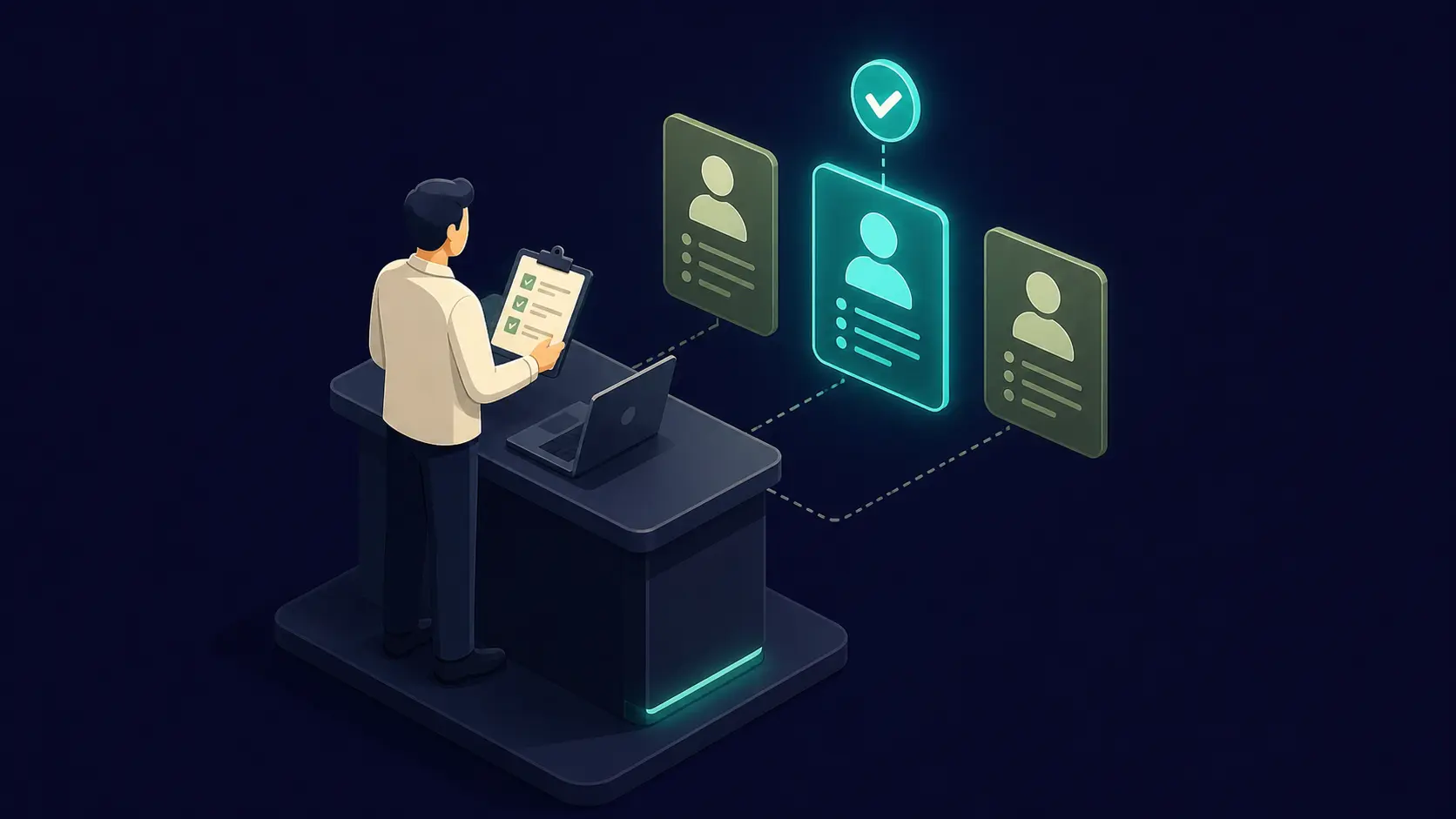
Before a candidate ever meets the hiring manager, most companies run a short qualifying conversation known as a pre-screening interview. Understanding the pre screening interview definition best practices helps both sides—recruiters save hours on misaligned candidates, and job seekers know exactly what to prepare for that critical first touchpoint.
This guide breaks down what a pre-screening interview actually is, why organizations rely on it, and the proven practices that make it effective. Whether you are a recruiter refining your process or a candidate preparing for one, you will find actionable steps here.
What Is a Pre-Screening Interview?
A pre-screening interview is a brief, structured conversation—typically 15 to 30 minutes—conducted by a recruiter or HR coordinator before a candidate advances to a full interview panel. Its purpose is to verify basic qualifications, assess communication skills, and confirm logistical fit (salary expectations, availability, location).
Unlike a technical or behavioral interview, the pre-screen focuses on deal-breakers and alignment rather than deep skill evaluation. Think of it as a mutual compatibility check: the recruiter confirms the candidate meets minimum requirements, and the candidate confirms the role matches their expectations.
This definition is central to pre screening interview definition best practices because it sets the scope. Overloading a screening call with complex questions defeats its purpose and frustrates candidates.
Why Pre-Screening Interviews Matter in Modern Hiring
High-volume roles can attract hundreds of applications. Without a filtering step, hiring managers spend time interviewing candidates who lack basic qualifications or have mismatched expectations. Pre-screening solves this by:
- Reducing time-to-hire: Unqualified candidates are filtered early, freeing panel time for strong contenders.
- Improving candidate experience: A short, respectful screen is better than a lengthy interview that ends in obvious misalignment.
- Standardizing evaluation: Consistent questions across all candidates reduce unconscious bias in early stages.
- Protecting employer brand: Candidates who feel heard—even when rejected—leave with a positive impression.
According to the Society for Human Resource Management, structured screening processes correlate with shorter hiring cycles and higher offer-acceptance rates.
Core Best Practices for Recruiters
Applying pre screening interview definition best practices starts with process design. Here are the fundamentals:
1. Define pass/fail criteria before you dial.
List the non-negotiable requirements for the role—certifications, years of experience, willingness to relocate, visa status. Score each candidate against the same checklist so decisions are consistent and defensible.
2. Keep it short and focused.
Fifteen to twenty minutes is the sweet spot. Ask five to seven questions maximum. Anything longer signals you are conducting a full interview, not a screen.
3. Use a standardized question set.
Every candidate for the same role should hear the same core questions. You can add one or two follow-ups based on their resume, but the baseline stays fixed.
4. Communicate next steps clearly.
End every call by telling the candidate what happens next and when they will hear back. Ambiguity erodes trust and damages your employer brand.
5. Document immediately.
Record notes in your ATS right after the call while details are fresh. Delayed documentation introduces memory bias and inconsistency.
Common Pre-Screening Questions and What They Reveal
The best screening questions are open enough to reveal communication style but specific enough to confirm qualifications. Here are examples aligned with pre screening interview definition best practices:
- "Can you walk me through your current role in two minutes?" — Tests conciseness and self-awareness.
- "What attracted you to this position?" — Reveals motivation and whether they read the job description.
- "What are your salary expectations for this role?" — Surfaces misalignment early before both sides invest more time.
- "Are you available to start within [timeframe]?" — Confirms logistical fit.
- "Do you have [specific certification or requirement]?" — Binary qualifier that saves everyone time.
Recruiter tip: Avoid asking "Tell me about yourself" without constraints. It invites five-minute monologues and does not help you score against criteria. Frame it as "Walk me through your last two roles in about two minutes."
Best Practices for Candidates Facing a Pre-Screen
If you are on the receiving end, understanding the pre screening interview definition best practices helps you give the recruiter exactly what they need:
- Be concise. The recruiter has a checklist. Answer directly, then offer to elaborate if they want more detail.
- Know your numbers. Salary range, notice period, and availability should be ready before the call.
- Research the company briefly. You do not need deep knowledge, but mentioning why the role interests you shows initiative.
- Prepare two questions. Asking about team size or next steps signals genuine interest without overloading a short call.
- Treat it professionally. Even though it is informal, find a quiet space, speak clearly, and avoid multitasking.
Candidates who treat the pre-screen as a real interview—without over-preparing—consistently advance at higher rates.
Mistakes That Derail Pre-Screening Interviews
Both recruiters and candidates make avoidable errors during this stage:
Recruiter mistakes:
- Asking too many questions and turning a screen into a full interview.
- Failing to sell the role—pre-screens are two-way evaluations.
- Ghosting candidates after the call with no follow-up.
- Using subjective "gut feel" instead of a scoring rubric.
Candidate mistakes:
- Rambling answers that exceed two minutes per question.
- Being unprepared for basic logistics questions (salary, start date).
- Treating the call casually—background noise, distracted tone.
- Not asking any questions, which signals low engagement.
How Technology Is Changing Pre-Screening
Automated and AI-assisted screening tools are increasingly common. Video pre-screens, chatbot questionnaires, and asynchronous audio responses let recruiters evaluate candidates at scale without scheduling conflicts. However, the core pre screening interview definition best practices still apply: keep it short, standardize criteria, and communicate clearly.
The key difference with technology-assisted screens is that candidates often record answers without a live interviewer. This means preparation matters even more—you cannot read social cues or ask clarifying questions in real time.
How to Practice Before a Real Interview
Whether you are preparing for a live recruiter call or an asynchronous video screen, rehearsal builds the conciseness and confidence that pre screening interview definition best practices reward.
Start by writing bullet-point answers to the five common screening questions listed above. Then practice delivering them aloud in under 90 seconds each. Record yourself and listen for filler words, unnecessary tangents, and unclear salary framing.
For realistic simulation, try AI-powered mock interviews that replicate recruiter screening scenarios. You get instant feedback on pacing, clarity, and whether your answers hit the criteria recruiters actually score—without waiting for a friend to role-play with you.
Building a Pre-Screening Scorecard
A scorecard turns subjective impressions into comparable data. Here is a simple template recruiters can adapt:
Criteria — Rating (1–5) — Notes
Relevant experience — ___ —
Communication clarity — ___ —
Salary alignment — ___ —
Availability match — ___ —
Motivation/interest — ___ —
Pass threshold: 18/25
Using a scorecard ensures every recruiter on the team applies the same standard, which is a cornerstone of pre screening interview definition best practices in any organization.
Further Reading
The Bureau of Labor Statistics HR Specialists page outlines the broader context of recruitment roles and how screening fits into the hiring lifecycle.
For candidates preparing for the next stage after a successful screen, the practice interview questions for management guide covers deeper behavioral and situational preparation.
Conclusion
A pre-screening interview is a short qualifying conversation designed to confirm basic fit before investing in a full interview loop. The pre screening interview definition best practices are simple: standardize your questions, score against clear criteria, keep the call under 20 minutes, and communicate next steps immediately.
For candidates, the takeaway is equally direct: be concise, know your logistics, and treat the screen as a professional conversation. Nail this step and you move to the rounds where you can truly showcase your skills.
Pick one practice from this guide—whether it is building a scorecard or rehearsing your two-minute walkthrough—and implement it before your next screening call.