
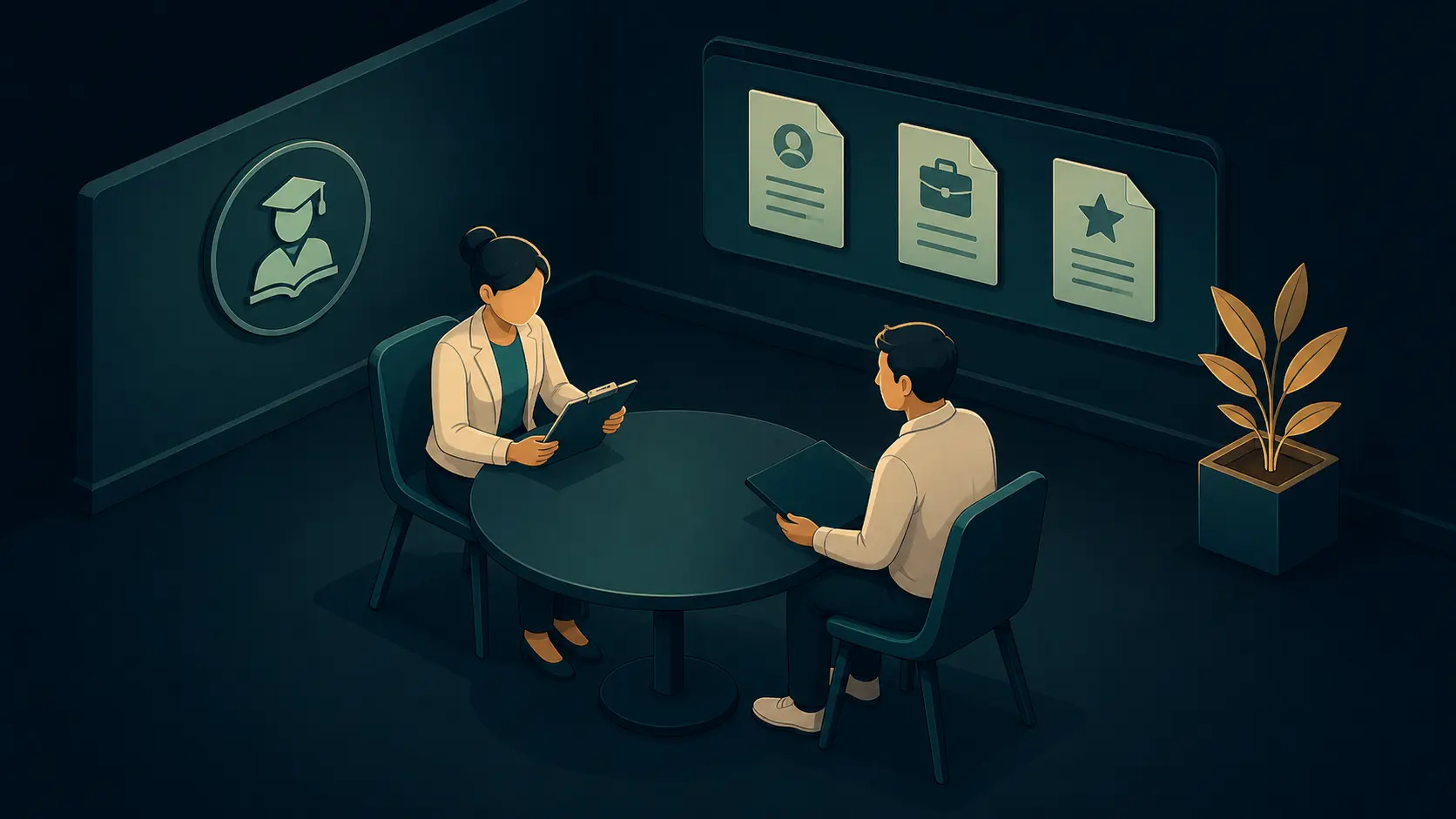
Most universities offer mock interviews through the career center, but many students book a single session without a plan. They walk in hoping for generic tips and walk out with limited improvement. A mock interview career center appointment works best when you treat it like a structured rehearsal, not a one-time chat.
Career center staff and peer coaches can give you realistic questions, honest feedback, and employer-aligned expectations. The gap is usually preparation: knowing what to practice, how to capture feedback, and how to iterate before real recruiting cycles.
This guide explains how to get maximum value from mock interview career center programs, what to bring, which question types to prioritize, and how to combine campus resources with additional practice.
Why a Mock Interview Career Center Session Is Worth Scheduling Early
Interview skills compound. Students who wait until the week before on-campus interviews often cram stories instead of refining delivery. Early mock interview career center use gives you time to fix weak answers, tighten your narrative, and build confidence.
Strong reasons to book now:
- You get an external perspective on clarity, pacing, and professionalism
- You practice answering out loud in a low-stakes setting
- You learn what recruiters in your target industries typically evaluate
- You identify gaps in your examples before high-pressure interviews
- You can repeat sessions as your goals or roles change
The best outcomes come from multiple sessions spaced over weeks, not one rushed meeting.
What Career Centers Usually Cover in a Mock Interview
Offerings vary by school, but most mock interview career center programs include some mix of the following:
- Behavioral and situational questions: Stories about teamwork, conflict, leadership, failure, and impact.
- Role or industry context: Tailored prompts for business, tech, healthcare, nonprofit paths, etc.
- Communication coaching: Feedback on structure, length, eye contact, and virtual setup.
- Resume and story alignment: Checking that your spoken answers match what you claim on paper.
- Follow-up practice: Simulating the second and third questions interviewers ask after your first answer.
Ask your career center what format they use (video, in-person, timed rounds) so you can match real interview conditions.
How to Prepare Before Your Appointment
Weak preparation produces weak feedback. Before your mock interview career center session:
- Choose 2–3 target role types and note required skills from real job postings
- Draft concise stories using STAR or STAR-R for top behavioral themes
- Bring your resume and a short list of companies or programs you are pursuing
- Test your camera, mic, lighting, and background if the mock is virtual
- Write down one specific worry (e.g., rambling, weak endings, nervous filler)
Arriving with focus helps your coach give precise, actionable advice instead of broad encouragement.
Question Categories to Request
Ask to practice a balanced set, not only "Tell me about yourself."
1) Opening and motivation
Examples: walk me through your background, why this field, why this organization.
2) Behavioral depth
Examples: conflict on a team, a mistake you owned, a time you influenced without authority.
3) Situational judgment
Examples: missed deadline, unclear instructions, stakeholder pushback.
4) Technical or case-style prompts (if relevant)
Examples: explain a project trade-off, walk through an analysis, discuss a portfolio piece.
5) Your questions for the employer
Practice closing with thoughtful, specific questions—not "So, what do you do here?"
A full mock interview career center block should touch at least three of these areas.
Frameworks That Make Feedback More Useful
Share these structures with your coach so they can score you consistently.
STAR-R for behavioral answers
- Situation
- Task
- Action
- Result
- Reflection
Past → Present → Future for motivation
- What shaped your path
- Why this opportunity now
- What you want to contribute next
After the session, ask: "Where did I lose structure?" and "Which example needs stronger metrics?"
Common Mistakes Students Make in Career Center Mocks
Even strong candidates underperform when they:
- Treat the session as a lecture instead of active practice
- Use vague stories without outcomes or numbers
- Go far over 90 seconds without a clear point
- Ignore advice because "the real interview will be different"
- Book only one mock and stop
Fix these by recording takeaways, rewriting one weak story, and booking a follow-up mock interview career center slot.
Sample Self-Review After Each Session
Use this checklist:
- One strength to keep (with a quote or moment from the mock)
- One fix for next time (structure, example, or delivery)
- One question type to drill before the next appointment
- One metric or detail to add to a key story
Small upgrades between sessions add up fast.
4-Week Plan Using Your Career Center
Week 1: Baseline
- Draft core stories and schedule your first mock interview career center mock
- Note top three improvement areas from feedback
Week 2: Behavioral depth
- Tighten two stories with measurable results
- Practice answers aloud daily in 60–90 second chunks
Week 3: Pressure simulation
- Second mock with harder follow-ups or a different coach
- Refine transitions and closing questions
Week 4: Interview readiness
- Focus on consistency, calm delivery, and weak spots only
- Run a short warm-up routine the day before real interviews
Between campus sessions, you can add repetitions with AI-powered mock interviews to keep momentum.
Questions to Ask Your Career Center Coach
Specific questions lead to specific upgrades.
- What did you hear as my clearest strength?
- Where did my answer drift or lose the question?
- Which story needs a stronger outcome or metric?
- How should I improve my virtual presence?
- What should I practice before we meet again?
How to Practice Before an Interview
Combine career center feedback with frequent, timed practice out loud. Mix behavioral prompts, situational questions, and role-specific scenarios. If you need extra reps between appointments, use practice interview with AI to stress-test structure and pacing.
Further reading and related guides
The National Association of Colleges and Employers documents career readiness competencies that many mock interview career center programs align with when coaching communication, teamwork, and professionalism. Federal Student Aid outlines how to explore careers while planning education and training, which pairs well with setting goals before your first mock. Khan Academy offers free college and career readiness lessons you can use to sharpen foundational skills between sessions.
For clearer self-review between coach sessions, use our mock interview rubric guide to score answers consistently.
Conclusion
A mock interview career center is one of the best free resources on campus when you use it with intent. Prepare stories, request balanced question types, capture concrete feedback, and iterate. Pair that discipline with consistent out-loud practice and you will show up to real interviews clearer, calmer, and more persuasive.
Book your next session with a written goal, review one weakness from your last mock, and measure progress each time. That is how campus practice converts into offers.