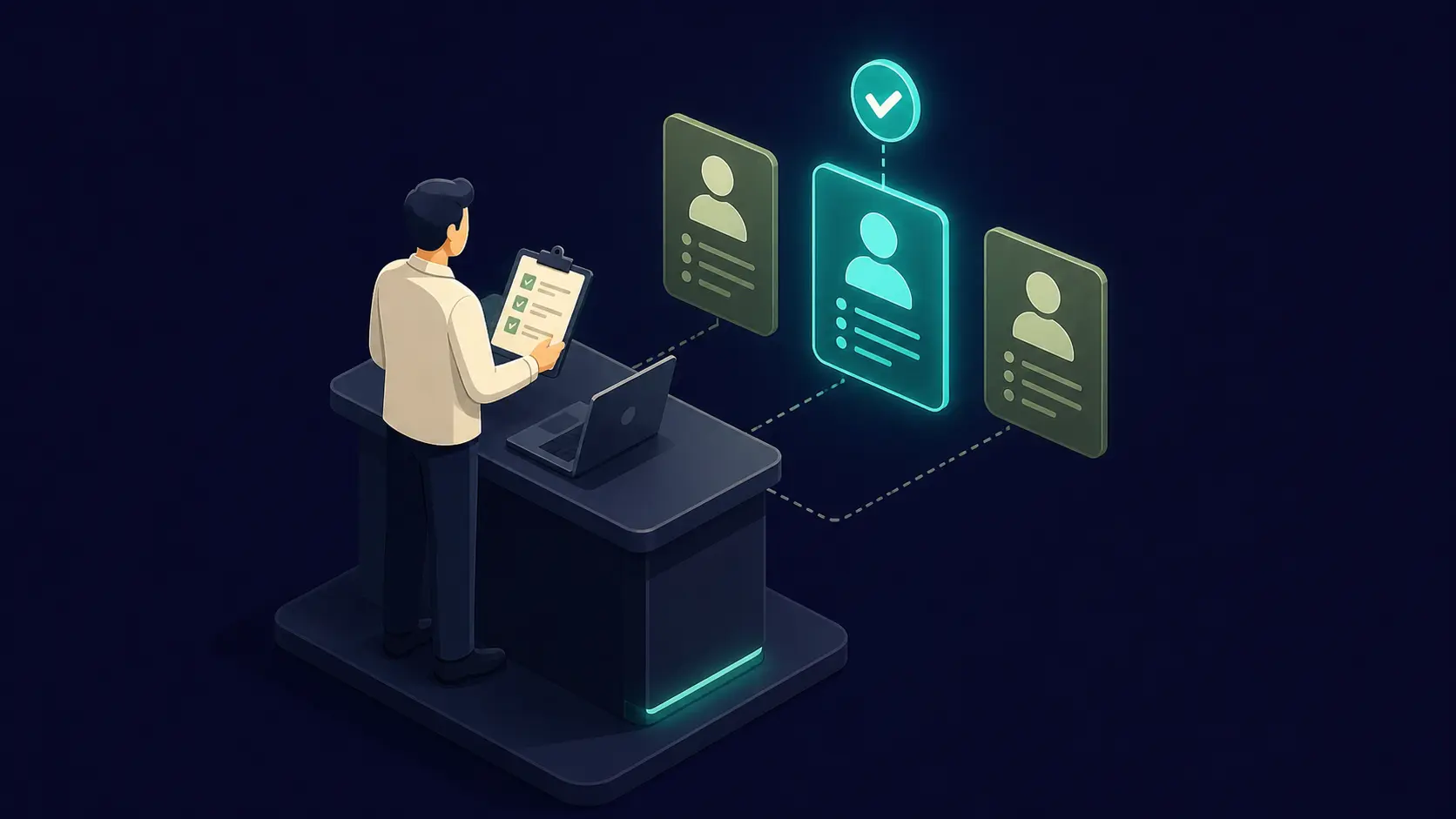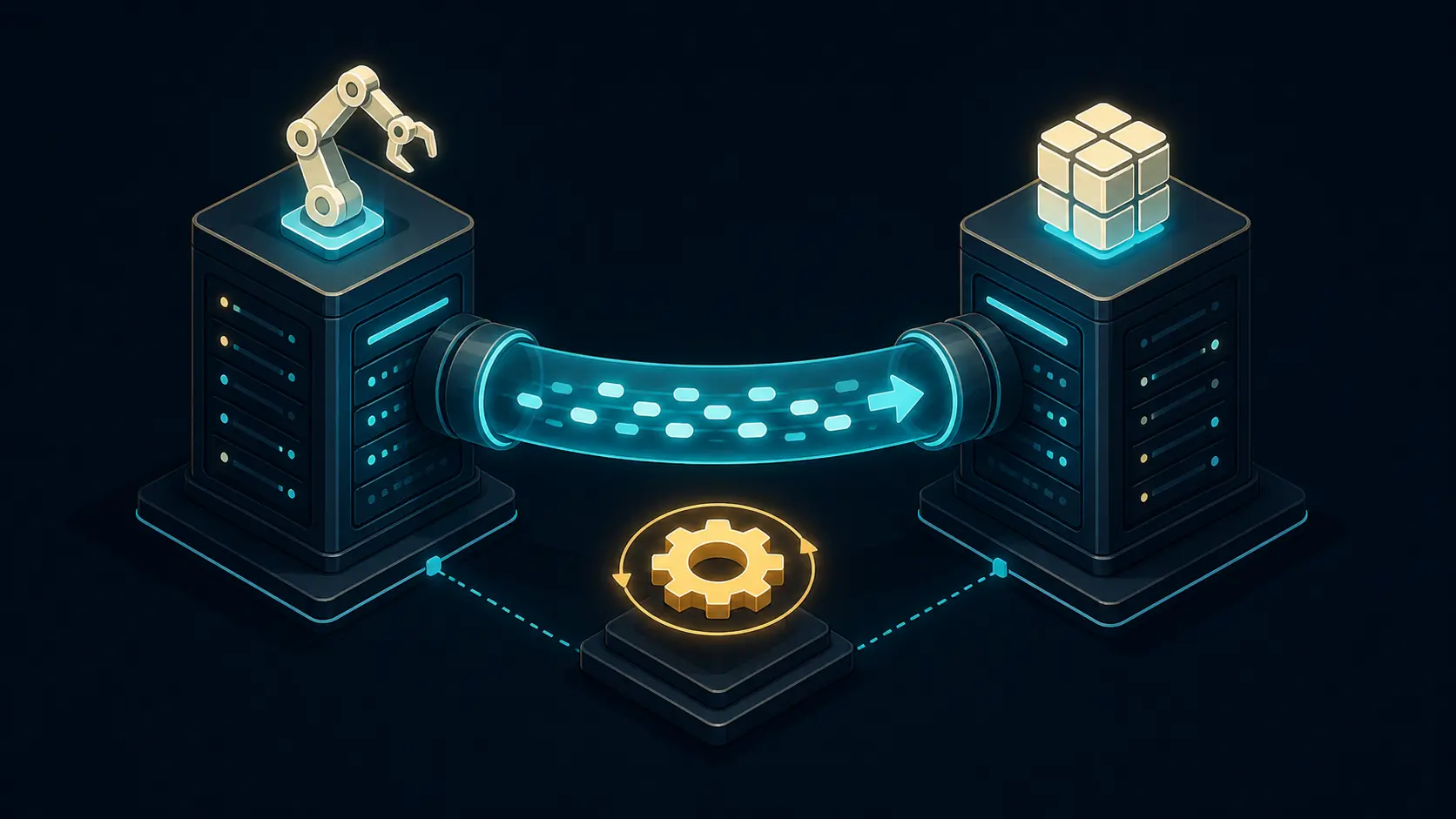

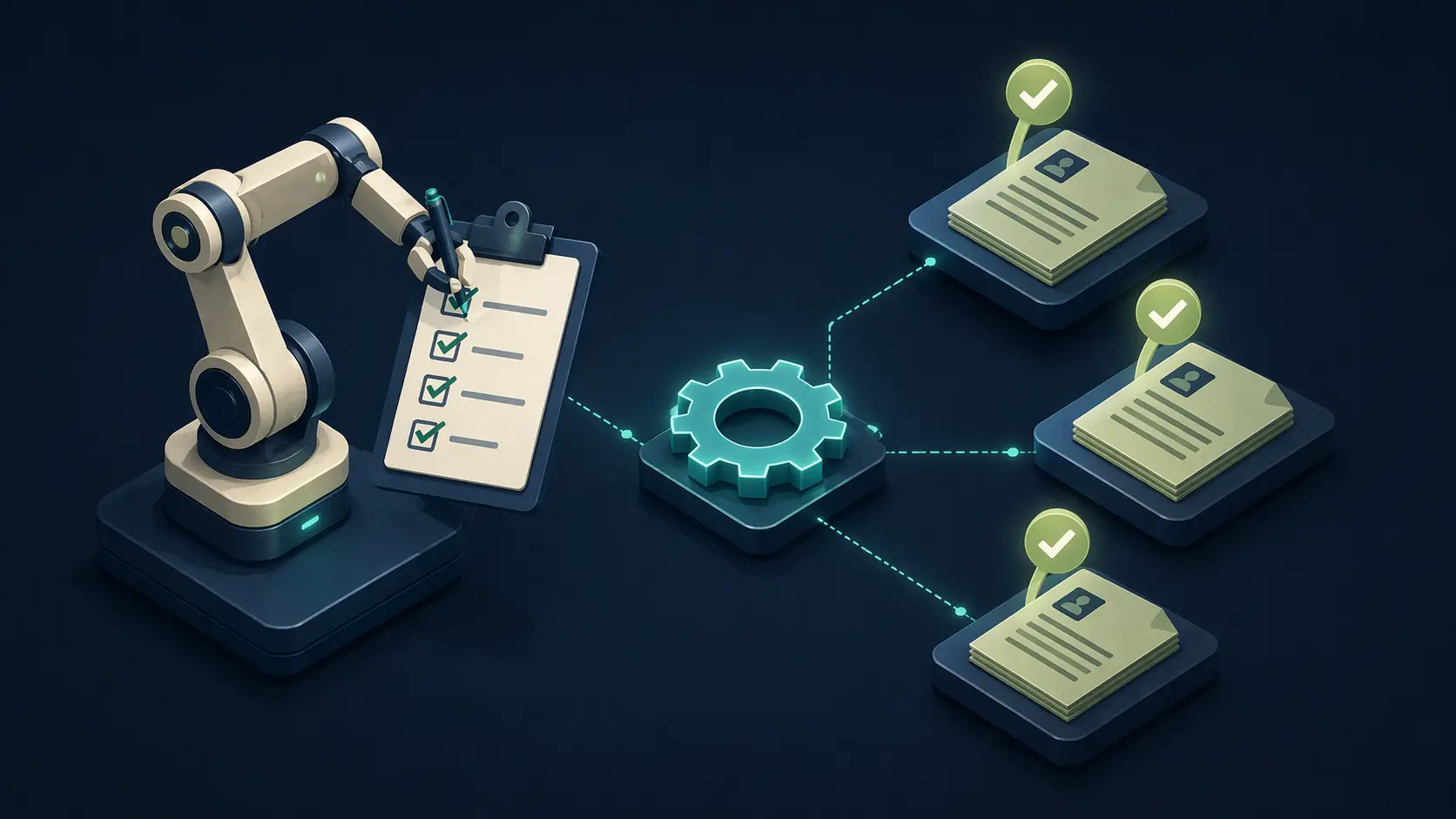
Reference checking remains the most manual, time-consuming step in enterprise hiring—until you implement business automation reference checks ai interviews. Traditional phone calls to three references per candidate consume 45–90 minutes of recruiter time. For teams screening 500+ candidates monthly, that's 300+ hours annually spent verifying the same basic facts. Modern AI-powered reference verification platforms collapse this friction. AI-powered verification workflows contact references automatically, synthesize responses into comparable data, and flag inconsistencies that require human follow-up. This guide explores how to evaluate, select, and implement business automation reference checks ai interviews systems that integrate seamlessly with your ATS, reduce time-to-hire, and strengthen compliance.
Why Manual Reference Checks Create Bottlenecks
Most hiring teams still conduct reference checks the same way they did in 2010: recruiter calls the reference, takes notes, stores them somewhere (email, spreadsheet, or forgotten), and moves on. This approach has four built-in problems. First, scheduling overhead: references are busy professionals. Finding a 15-minute window to speak with three references takes 1–2 weeks minimum. Second, inconsistent evaluation: recruiters ask different questions, follow different scripts, and interpret answers differently. One recruiter hears enthusiasm; another hears overstatement. Third, compliance risk: unstructured notes lack audit trails. If a candidate disputes a negative reference, you cannot prove what was said. Fourth, wasted time on low-value candidates: you often call references for candidates who will decline the offer anyway.
Automated AI platforms solve all four. Workflows eliminate scheduling (references submit responses asynchronously, 24/7). AI scoring standardizes evaluation across every candidate. Compliance becomes built-in (every response logged, timestamped, stored). And smart triage ensures you only deep-dive references for top candidates. The ROI compounds: 15 minutes saved per candidate × 500 candidates × $50/hour recruiter cost = $6,250 annually, just for time savings alone.
Define Your Reference Check Baseline
Before selecting an automated reference platform, document your current state:
- References per candidate: How many references do you verify? (Typical: 2–3)
- Time per reference call: Include scheduling time. (Typical: 30–45 minutes total)
- Reference request response rate: What percentage of references actually respond? (Typical: 40–60%)
- Compliance requirements: Do you need FCRA certification, GDPR compliance, or EEOC documentation?
- Integration points: Does your ATS (Workday, Greenhouse, Lever) need to connect directly?
- Current vendors: Are you already using a background check vendor? Can they add reference automation?
- Interview loop timing: When do you check references? (Pre-offer, post-offer, during final round?)
Example baseline: 3 references per candidate × 45 minutes per reference = 135 minutes per candidate. 500 candidates annually = 67,500 minutes = 1,125 hours = $56,250 in recruiter labor. If business automation reference checks ai interviews reduces this to 5 minutes per reference (quick AI verification scan + 1 manual follow-up for red flags), total cost drops to $4,700 annually. Payback period for a $5K/year platform: about 10 months.
How AI Reference Automation Works
AI-powered platforms follow a five-step workflow:
Step 1: Candidate Selection.
After a candidate passes the final interview round, the system automatically requests references (via email, SMS, or web form). The candidate provides name, email, and relationship (manager, peer, direct report).
Step 2: Reference Outreach.
The platform sends a standardized questionnaire to the reference. Unlike recruiter calls, this is asynchronous. References answer on their time: during lunch, evenings, weekends. Response rates jump from 40–60% (phone calls) to 75–85% (async forms).
Step 3: AI Synthesis.
The platform analyzes open-ended text responses, extracts key themes (communication, technical skills, collaboration, reliability), and flags inconsistencies. If one reference says "detail-oriented" and another says "misses deadlines," the system flags the discrepancy for human review.
Step 4: Scoring and Recommendations.
AI assigns a score (1–10) based on responses. This score appears alongside recruiter notes in your ATS. The system recommends "green light," "proceed with caution," or "red light" based on response patterns and your company's priority criteria.
Step 5: Audit Trail.
Every response is stored with timestamps, IP addresses, and reference identity verification. Compliance reports are automatic. The entire process takes 3–5 days (instead of 2–3 weeks with phone calls). Recruiter involvement drops to 5–10 minutes of review per candidate (only for flagged items or borderline scores).
AI Reference Verification vs. Traditional Background Checks
Many teams conflate reference checks with background checks. They're different:
Background checks
verify factual claims: employment dates, degree credentialing, criminal history, credit history. Third-party vendors (Sterling, Checkr, First Advantage) handle this. Compliance is strict (FCRA, state-specific laws). Cost: $20–$50 per candidate.
Reference checks
gather subjective feedback: performance assessment, behavioral fit, communication skills, reliability. Traditionally manual (phone calls); increasingly automated via business automation reference checks ai interviews platforms. Less regulated; more flexible. Cost: $5–$15 per candidate, or $200–$500/month per recruiter using internal platforms.
The best enterprise hiring strategy combines both. Use AI-powered reference platforms for rapid behavioral verification and screening; use third-party background checks for compliance-driven factual verification. Many platforms now bundle both, though they may use different vendors for each.
Feature Comparison: What to Evaluate
When selecting automated reference platforms, compare these capabilities:
Questionnaire customization:
Can you tailor questions by role or department? Generic templates save time; role-specific questions extract better insights.
Reference source verification:
Does the platform verify that the person answering is actually the reference? (Email domain match, optional video verification, phone number validation.)
Multi-language support:
If you hire internationally, can references respond in their native language?
Integration depth:
Does the platform integrate with your ATS, HRIS, and background check vendor? Or do you manually export/import data?
Scoring logic transparency:
Can you customize scoring weights? Some platforms weight "leadership" heavily; you might prioritize "collaboration."
Compliance automation:
Does the system handle FCRA disclaimers, consent forms, GDPR data deletion, and audit trail exports automatically?
Reference reminders:
If a reference doesn't respond in 3 days, does the system send an automated reminder? (Increases response rate by 15–25%.)
Inconsistency flagging:
Does AI highlight contradictions across multiple references? Red flag: one reference says "left due to performance issues"; another says "positive exit."
Mobile accessibility:
Can references complete questionnaires on mobile devices without friction?
Cost Models for Automated Reference Verification
Pricing varies significantly:
Per-check model:
$5–$10 per reference verified. You pay only for candidates who reach the reference-check stage. For 500 annual hires with 3 references each = $7,500–$15,000/year. Best for: small teams, variable hiring volume.
Monthly seat-based:
$200–$400 per recruiter/month for unlimited reference checks. 5 recruiters = $1,000–$2,000/month = $12,000–$24,000/year. Best for: high-volume hiring, predictable team size.
Bundled background + reference:
$50–$100 per candidate for complete verification (background check + reference check). For 500 hires = $25,000–$50,000/year. Best for: enterprise with strict compliance requirements.
Custom enterprise:
$10,000+/month for dedicated support, custom integrations, and white-labeling. Best for: global enterprises with 5,000+ hires annually. For mid-market teams (200–1,000 annual hires), per-check models for business automation reference checks ai interviews usually cost less unless your hiring volume is extremely predictable.
Implementation Timeline for Reference Automation
Week 1: Contract, SSO/API setup, and ATS integration testing. Hidden cost: IT time (8–12 hours).
Week 2: Questionnaire customization and approval workflow design. Internal time: 15–20 hours from hiring team.
Week 3: Pilot with 20 candidates who are already in final rounds. Measure: response rate, time savings, score variance across references.
Week 4: Rollout to all hiring pipelines, recruiter training, and troubleshooting. Include runbooks for edge cases (reference doesn't respond, reference disputes claim, inconsistent scoring).
Total setup time: 60–80 hours internal labor. At $50/hour loaded cost, that's $3,000–$4,000 in setup investment. For most companies, this breaks even in 4–6 months.
Real-World Scenario: Business Automation Reference Checks AI Interviews in Action
Engineer "Alice" passes your technical interview and reaches final rounds. Traditional workflow: recruiter sends email to three references, waits 1–2 weeks for all three to respond (one never does), schedules 30-minute call with each of the two who do respond, spends 45 minutes taking notes, and submits assessment to hiring committee. Total time invested: 4 weeks, 2.5 hours recruiter time, $125 in labor.
AI-powered workflow: System automatically sends questionnaire to three references the day after final interview. Within 48 hours, two respond (response rates jump when async). AI analyzes responses, detects consensus ("Strong technical communicator, sometimes under-estimates complexity"), and assigns score 7.5/10. Recruiter reviews summary in 5 minutes, sees no red flags, approves for offer. Total time: 3 days, 5 minutes recruiter time, $20 in labor.
Impact: 26-day acceleration, 97% time savings, $105 cost reduction per candidate. For 100 annual hires: 87 days faster hiring, 250 hours recruiter time freed, $10,500 annual savings.
Common Mistakes When Implementing Automated Reference Systems
Mistake 1: Checking references too late. Many teams check references only after offer acceptance ("post-offer"). By then, you've lost negotiation leverage. Best practice: verify references during final round so you can immediately move to offer. This requires smart triage: only reference check top 2–3 candidates per role.
Mistake 2: Using generic questionnaires. A platform's default 10-question form works for any role. But your software engineer hiring needs different assessment than your sales hiring. Customize questions by role family. Cost: 4–6 hours upfront; ROI: 15% better predictive accuracy.
Mistake 3: Ignoring AI inconsistency flags. If AI highlights that references disagree on a key competency, don't ignore it. This is your signal to conduct a brief follow-up call with the candidate. Frame it neutrally: "I'd like to clarify your experience with X—I'm seeing varied feedback from references."
Mistake 4: Over-automating without human judgment. AI scoring is a tool, not a law. If three references rave about a candidate but AI assigns a 5.5/10 due to keyword density, trust the human narrative. Review AI recommendations, but don't let algorithms override judgment.
Mistake 5: Skipping compliance setup. FCRA requirements (disclosure, consent, adverse action procedures) vary by state and role. Penalties for non-compliance range from $100–$1,000 per violation. Require your vendor to handle compliance templates. Verify their certifications before signing.
How to Practice Before an Interview
If you're preparing for a role that includes background checks and reference verification, prepare your references in advance. Let them know they'll receive a questionnaire or call during your hiring process. Provide them with talking points: your key accomplishments, skills you're highlighting, and any context about the role. Using mock interview platforms helps you articulate your achievements clearly, which makes it easier for references to speak authentically about your strengths during business automation reference checks ai interviews processes.
Conclusion
Business automation reference checks ai interviews are no longer a luxury—they're table stakes for enterprise hiring. Manual reference checking wastes 300+ recruiter hours annually while introducing compliance risk and inconsistent evaluation. Modern platforms reduce this to 5–10 minutes per candidate while standardizing assessment, accelerating time-to-hire by 2–3 weeks, and strengthening audit trails. When selecting a vendor for business automation reference checks ai interviews, prioritize ATS integration, role-specific customization, and FCRA compliance. Pilot with 20 candidates before full rollout. The ROI compounds: your first 100 hires pay for the platform entirely through labor savings alone.