
What is a cover letter is one of the most common questions job seekers ask, especially in an era dominated by online applications and automated screening systems. A cover letter is not a formality. It is a strategic document designed to explain context, intent, and relevance beyond what a resume can show.
This article explains what a cover letter is, how it functions in modern hiring, when it is still useful, and how it supports the overall job application process.
What Is a Cover Letter?
A cover letter is a short written document submitted alongside a resume. Its purpose is to introduce the candidate, clarify motivation, and connect experience to the role being applied for.
Unlike a resume, which lists facts, a cover letter explains reasoning. It provides narrative, alignment, and professional intent.
Why Cover Letters Exist
Cover letters originated as formal introductions before interviews were common. Over time, their role shifted from etiquette to evaluation.
Today, a cover letter helps employers understand: why you applied, how you interpret the role, and whether your goals align with the organization.
What a Cover Letter Is Not
A cover letter is not a resume summary. It should not repeat bullet points verbatim. Its value lies in explanation, not duplication.
It is also not a personal essay. Professional relevance must remain central.
When a Cover Letter Is Still Required
Despite changing hiring trends, cover letters are still expected in certain cases.
- Roles that emphasize communication
- Senior or leadership positions
- Career transitions or role changes
- Applications through referrals
- Companies that explicitly request one
How Recruiters Read Cover Letters
Recruiters scan cover letters quickly. They look for clarity, relevance, and motivation within the first few lines.
A strong opening determines whether the rest is read at all.
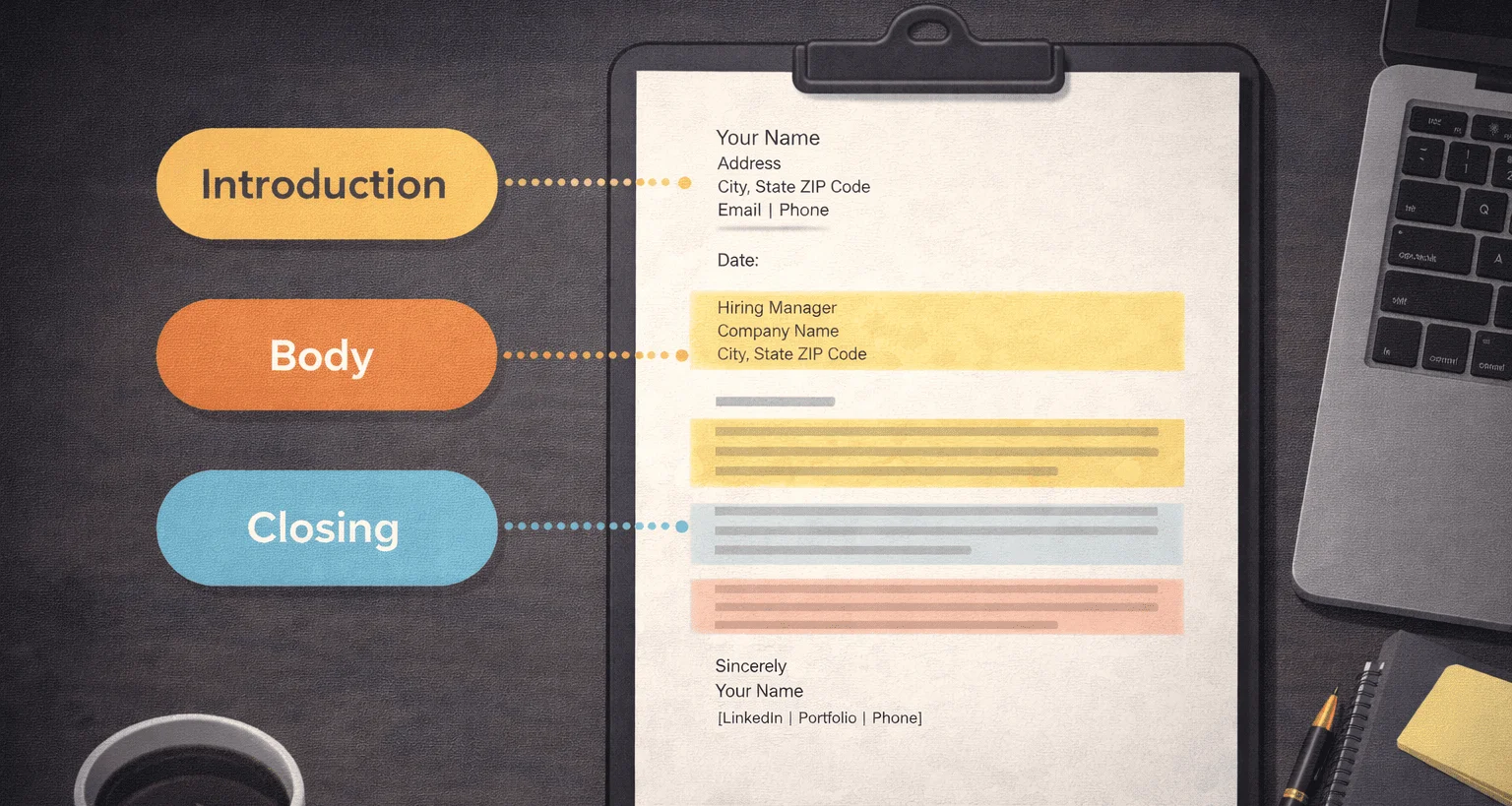
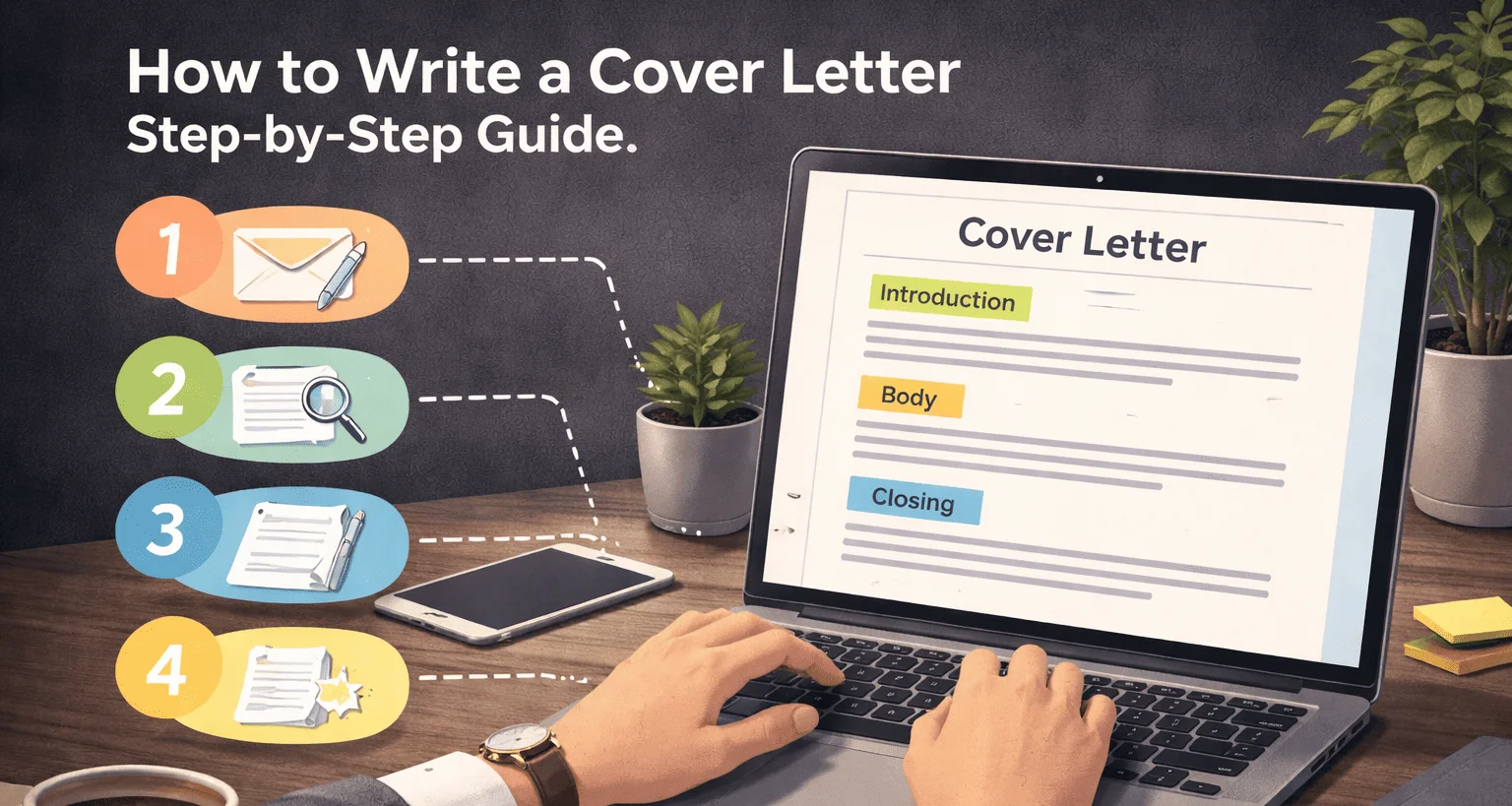
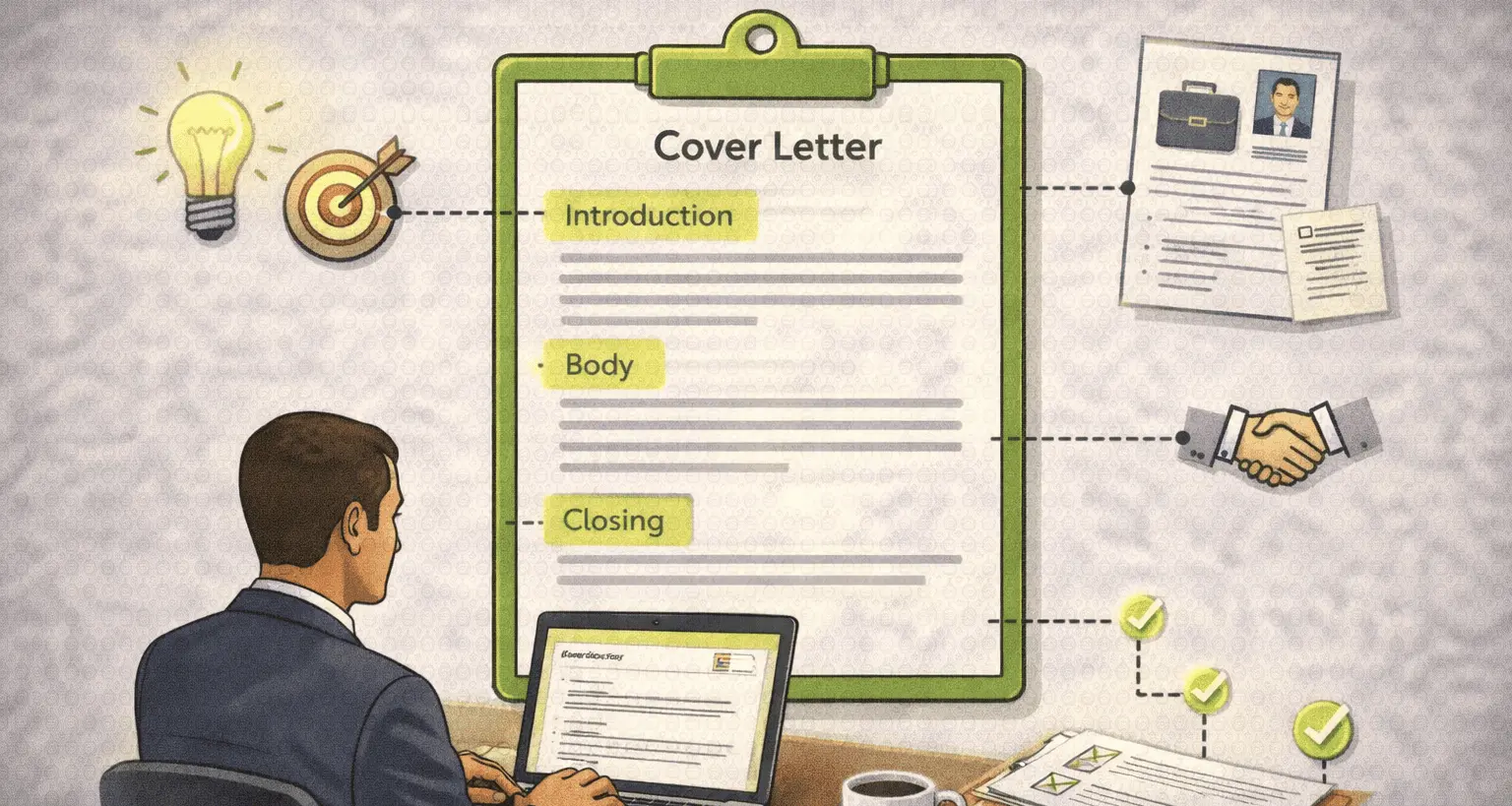
Core Sections of a Cover Letter
While formats vary, effective cover letters share a common structure.
Opening Paragraph
State the role, how you found it, and why you are interested. This section sets context.
Middle Paragraphs
Explain how your experience aligns with the role. Focus on relevance, not full career history.
Closing Paragraph
Reaffirm interest, signal readiness for next steps, and close professionally.
How a Cover Letter Supports Interview Outcomes
Many interview questions originate from statements made in cover letters. The document becomes a reference point.
This makes cover letters closely connected to interview preparation strategies.
Cover Letter vs Resume
A resume answers what you did. A cover letter answers why it matters.
Used together, they provide a complete professional picture.
Common Cover Letter Mistakes
Many candidates undermine their applications through avoidable errors.
- Generic openings
- Overly long paragraphs
- Repeating resume bullet points
- Ignoring the company context
- Weak or abrupt endings
Do You Always Need a Cover Letter?
Not every application requires one. However, when optional, a well-written cover letter often becomes a differentiator.
This is especially true when applying for competitive roles.
Digital Cover Letters and Online Applications
Many platforms now use text fields instead of attachments. The principles remain the same, but brevity becomes more important.
Adapt formatting, not content intent.
How to Evaluate Your Own Cover Letter
Before submitting, ask whether your cover letter clearly explains: why this role, why this company, and why you.
If the answer is unclear, revision is needed.
Final Thoughts
Understanding what is a cover letter helps candidates use it strategically, not mechanically. When written with intent, a cover letter becomes a bridge between experience and opportunity.
In competitive hiring markets, clarity and relevance matter. A thoughtful cover letter still delivers both.