

The Global Entry interview is the final checkpoint before gaining access to one of the most efficient travel programs available to U.S. travelers. After completing the application and receiving conditional approval, this short in-person interview verifies your identity, travel history, and eligibility for trusted traveler status. While the process sounds intimidating, most applicants are surprised by how fast and straightforward it actually is.
This guide explains what the Global Entry interview really involves, how long it takes, what officers verify, and how to prepare so the process stays smooth. Think of this as the master overview—clear, realistic, and focused on what actually matters during approval.
What the Global Entry Interview Is (and Isn’t)
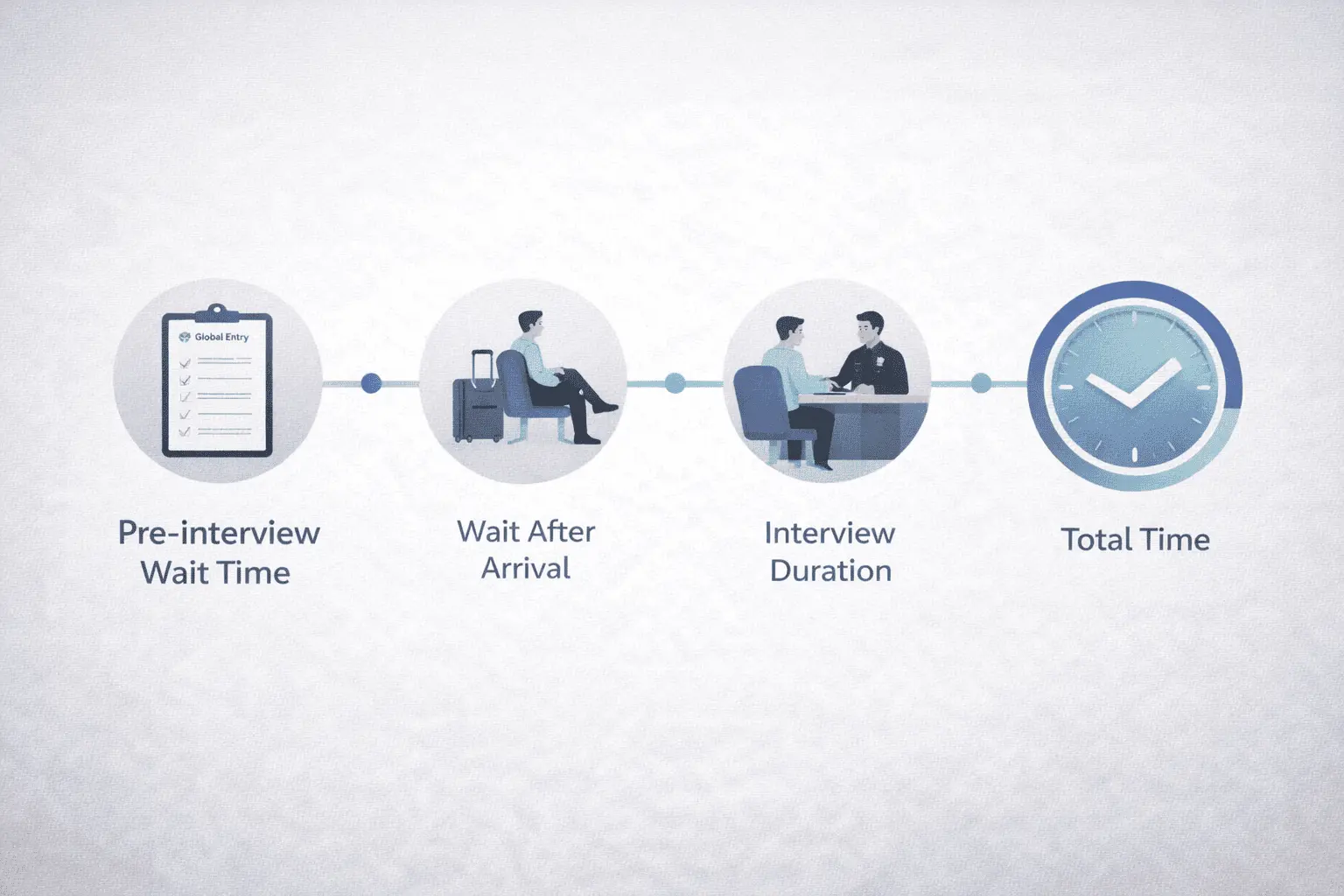
A Global Entry interview is a brief verification appointment with a U.S. Customs and Border Protection (CBP) officer. The purpose is not to judge or compete with other applicants, but to confirm that your identity, background, and travel history match what you submitted online. Most interviews last between 5 and 15 minutes.
Officers are looking for consistency, honesty, and eligibility—not rehearsed answers. If your documentation is clean and your information aligns with your application, approval often happens immediately.
Interview Process: Step by Step
- Identity verification and document review
- Confirmation of address, employment, and travel history
- Biometric capture (photo and fingerprints)
- Explanation of Global Entry kiosk usage
- Approval decision in most cases
The atmosphere is typically businesslike and efficient. Officers move quickly and expect concise, accurate responses rather than long explanations.
Scheduling Your Global Entry Interview
Once conditionally approved, you can schedule an interview through your Trusted Traveler Program account. Availability varies widely by location, and popular enrollment centers may be booked weeks or months in advance.
Many travelers choose Enrollment on Arrival, which allows interviews at select airports when returning from an international trip. Read the step-by-step Enrollment on Arrival process here.
Documents You Must Bring
Having the correct documents ready keeps the interview short and smooth. CBP officers typically request:
- A valid passport
- One additional government-issued ID
- Proof of current address
- Conditional approval confirmation
- Permanent resident card, if applicable
Originals are preferred. Organizing your documents ahead of time signals preparedness and helps the officer complete verification efficiently.
Interview Questions: What to Expect
Interview questions are straightforward and tied directly to your application. Officers focus on travel history, employment clarity, and customs compliance—not hypothetical scenarios.
For a complete breakdown of real interview questions and how officers evaluate responses, see our dedicated Global Entry interview questions guide.
How to Prepare Properly
- Review your submitted application beforehand
- Know your recent international travel history
- Bring all required documents in one folder
- Arrive early, especially at airport locations
- Dress neatly and respect federal facility rules
Overpreparing is unnecessary, but being organized significantly reduces delays or follow-up reviews.
After the Interview: Approval Timeline
Most applicants receive approval immediately or within a few days. In some cases, applications are placed under further review to verify specific details. This is normal and does not automatically indicate a problem.
- Approval notifications typically arrive within 24–72 hours
- Membership lasts five years
- TSA PreCheck is included automatically
Final Thoughts
The Global Entry interview is far less stressful than most applicants expect. As long as your background is clean and your information matches your application, the process feels more like a formal verification than an interview.
Prepare your documents, answer honestly, and stay concise. Once approved, you’ll enjoy faster customs clearance and smoother international travel for years.